Even though more and more stores, restaurants, and workplaces are becoming dog-friendly, sometimes leaving your dog home alone is unavoidable. How long is it OK to leave your dog home alone for? There is actually no easy answer. It depends on a lot of factors such as your dog’s age, breed, health, and whether or not he has separation anxiety.
Puppies
In general, puppies need to pee one hour for every month of their age. That means your two-month-old puppy that you just brought home needs to go outside every two hours. By the time he’s six months old, he can hold his bladder for up to six hours.
Healthy adult dog
A healthy adult dog can go six to eight hours between potty breaks. Keep in mind, though, that if your dog needs to hold his bladder for eight hours a day on a regular basis, that can lead to urinary tract infections, stones, or crystals. If you can’t get home on your lunch break to let your dog out, you might consider hiring a dog walker or taking your pup to doggy daycare.
Senior dog
As dogs age, they can lose the ability to hold their bladder for long periods of time. Plan on taking your senior dog out every two to six hours.
Dogs with health issues
Some health conditions or their treatments can cause your dog to need to urinate more frequently. Steroids, in particular, can cause a dog to drink a lot more water than usual, which then causes more need to urinate. Talk to your vet about your dog’s condition to see how long they think your pup may be able to hold his bladder. Your dog will certainly let you know if you’ve left him alone for too long, and you’ll be greeted by the guilty face of a dog who didn’t want to have an accident inside the home but had no choice.
If you work from home
If you work from home, your dog (and his bladder) are used to you being around more often than not. Try not to leave him alone for more than four hours when you do need to leave the house. A dog walker can give your dog the potty break he expects when you need to leave him alone longer than that.
Dogs with separation anxiety
Obviously, the longer you need to leave a dog with separation anxiety home alone, the more upset he’s likely to become. Doggy daycare, dog walkers, and treat-dispensing webcams can all help your dog get through the day if you can’t bring him to work with you. For more information on separation anxiety, check out this article.
In general
-Give your dog a safe space to stay while you’re gone. Try this method at your own discretion. Some dogs feel more comfortable in smaller spaces, whether that’s limiting them to one room of your house or giving them a comfortable crate to bed down in. Other dogs will become more anxious in an enclosed space and will be happier if they can roam your entire home.
-Don’t make leaving a big deal. If you start to become anxious about leaving, your dog will pick up on it and become more anxious. The more relaxed you can make your departure without a big farewell speech and hug, the better your dog will do while you’re gone.
-Don’t turn your arrival home into a big production. Again, if turns into a party as soon as you walk back through the door, your dog will spend all day anxiously awaiting the big moment. When you come home, spend at least five minutes acting like it’s no big deal before lavishing your dog with all your attention.
-Leave him with plenty to do. Help your dog avoid boredom by leaving him with puzzle toys, treat-dispensing balls, bully sticks, or a Comfort Cuddler to snuggle with in order to prevent your dog from taking out his boredom on your shoes or furniture.
-Start and end the day with long walks. Walks are a great way to burn off your dog’s energy and make him more inclined to sleep while you’re gone. It’s also great bonding time between you and your pup.
Even though more and more stores, restaurants, and workplaces are becoming dog-friendly, sometimes leaving your dog home alone is unavoidable. How long is it OK to leave your dog home alone for? There is actually no easy answer. It depends on a lot of factors such as your dog’s age, breed, health, and whether or not he has separation anxiety.
Puppies
In general, puppies need to pee one hour for every month of their age. That means your two-month-old puppy that you just brought home needs to go outside every two hours. By the time he’s six months old, he can hold his bladder for up to six hours.
Healthy adult dog
A healthy adult dog can go six to eight hours between potty breaks. Keep in mind, though, that if your dog needs to hold his bladder for eight hours a day on a regular basis, that can lead to urinary tract infections, stones, or crystals. If you can’t get home on your lunch break to let your dog out, you might consider hiring a dog walker or taking your pup to doggy daycare.
Senior dog
As dogs age, they can lose the ability to hold their bladder for long periods of time. Plan on taking your senior dog out every two to six hours.
Dogs with health issues
Some health conditions or their treatments can cause your dog to need to urinate more frequently. Steroids, in particular, can cause a dog to drink a lot more water than usual, which then causes more need to urinate. Talk to your vet about your dog’s condition to see how long they think your pup may be able to hold his bladder. Your dog will certainly let you know if you’ve left him alone for too long, and you’ll be greeted by the guilty face of a dog who didn’t want to have an accident inside the home but had no choice.
If you work from home
If you work from home, your dog (and his bladder) are used to you being around more often than not. Try not to leave him alone for more than four hours when you do need to leave the house. A dog walker can give your dog the potty break he expects when you need to leave him alone longer than that.
Dogs with separation anxiety
Obviously, the longer you need to leave a dog with separation anxiety home alone, the more upset he’s likely to become. Doggy daycare, dog walkers, and treat-dispensing webcams can all help your dog get through the day if you can’t bring him to work with you. For more information on separation anxiety, check out this article.
In general
-Give your dog a safe space to stay while you’re gone. Try this method at your own discretion. Some dogs feel more comfortable in smaller spaces, whether that’s limiting them to one room of your house or giving them a comfortable crate to bed down in. Other dogs will become more anxious in an enclosed space and will be happier if they can roam your entire home.
-Don’t make leaving a big deal. If you start to become anxious about leaving, your dog will pick up on it and become more anxious. The more relaxed you can make your departure without a big farewell speech and hug, the better your dog will do while you’re gone.
-Don’t turn your arrival home into a big production. Again, if turns into a party as soon as you walk back through the door, your dog will spend all day anxiously awaiting the big moment. When you come home, spend at least five minutes acting like it’s no big deal before lavishing your dog with all your attention.
-Leave him with plenty to do. Help your dog avoid boredom by leaving him with puzzle toys, treat-dispensing balls, bully sticks, or a Comfort Cuddler to snuggle with in order to prevent your dog from taking out his boredom on your shoes or furniture.
-Start and end the day with long walks. Walks are a great way to burn off your dog’s energy and make him more inclined to sleep while you’re gone. It’s also great bonding time between you and your pup.
Dogs will chew on just about anything they can sink their teeth into, and it often gets them into trouble. Yes, they occasionally destroy a favorite shoe, but that’s nothing compared to the risk of them choking. They can break bones into barely swallowable pieces and try to quickly gobble down the smelly sock they know you won’t like them having, and all of those things are potential choking hazards. Many dogs also accidentally swallow balls and other toys that are too small for their size.
When it happens, the first thing dog owners feel is overwhelming panic. They see their dog choking on a foreign object, and if they don’t act fast, the incident could turn fatal. It’s widely known that the Heimlich maneuver can save the life of a person who’s choking, but did you know there’s a doggy version that could end up saving your furry best friend? A dog owner recently took to Twitter to share how knowing the canine version of the Heimlich maneuver saved her dog’s life, and now pet owners are spreading the word to help even more animals. Here’s what you need to know.
my dog started choking and i almost had a panic attack so please spread this around so everyone knows what to do if their child is choking pic.twitter.com/RshnKxiXVg
The first step in saving a choking dog’s life is knowing when they’re in trouble. A dog that is choking might paw at their mouth and try opening their jaw wide and extending their neck in an attempt to dislodge whatever’s in their throat. They might also start gasping and heaving their chest while trying to take in air.
Act Quickly
When a dog starts choking, you have only minutes to clear their airway and get them breathing again. Panic is natural, but it’s important to process the situation quickly and keep a clear head while you save your dog’s life. Follow these steps to perform the canine Heimlich maneuver.
1. Carefully open the dog’s mouth and look inside toward their throat to check for a possible obstruction. If you can see something, reach your hand into their mouth and remove the object with your fingers. Pet MD suggests that if you can’t get it with your fingers, use a flat spoon handle to pry the object away from the roof of the mouth.
2. If you can’t see an obstruction, try giving a sharp “blow” between the dog’s shoulder blades. This might do the trick and dislodge the object from their throat so they can cough it the rest of the way up.3. For small dogs, grab their back legs and carefully invert their body so their head is facing down and their tail is toward the ceiling. Next, apply firm pressure right below the rib cage in short thrusts. Continue to check the dog’s mouth to see if something becomes visible.
4. For larger dogs, inverting their body will likely be too hard. Instead, if they’re standing, wrap your arms around their belly and bring your hands together right below their rib cage. Make a fist and firmly push up and forward. Repeat the action until the dog coughs up something and starts breathing.
5. For large dogs that are already unconscious or lying down, put one hand on their back and use the other to squeeze their stomach up and forward in the direction of their throat.
6. If none of the above works, call your vet immediately or rush your dog to the nearest emergency veterinary hospital.
Having this knowledge in the back of your mind ensures that if your dog starts choking, you’re prepared to save their life. Remember to always observe your dog while they’re playing with toys and chewing on bones. And most importantly, share this information with other dog owners in your life. The more people who know, the more lives can be saved.
Since the concept was launched in 1999, “Take Your Dog To Work Day” has become a huge success celebrated by many companies.
After all, what business wouldn’t benefit from a little furry face and some unconditional love?
Pet Sitters International coined the term and came up with the idea as a way to help homeless animals find permanent and loving homes. Witnessing the bond between owners and their dogs can help convince non-dog owners that they need a furry companion in their life.
So, first off, you should ask your boss if you and your coworkers can get involved in “Take Your Dog to Work Day.” Hopefully, no one at your work is allergic!
Next, you must make sure that your best friend is prepared!
Here Are My 6 Tips for a Successful “Take Your Dog to Work Day”
1. Make an Appointment With Your Vet
Your dog should be vaccinated and evaluated to ensure he is healthy for a full shift at your work.
Dogs with allergies, infections, or arthritis should be medically cleared before TYDTWD.
2. Trim Your Dog’s Nails
On the off chance that your dog jumps on someone, his nails should be short and dremeled or filed smooth.
Your dog definitely shouldn’t be jumping! Especially if you want to be a part of TYDTWD next year!
3. Work on Your Dog’s Manners
Only really well-behaved, and social, dogs should be involved in TYDTWD.
But even really well-behaved dogs may need to spruce up their obedience a little, before the big day!
I suggest before the big day that you work with and train your dog five times a day for 5-20 minutes a session.
Let’s face it; you want your dog to be a rock star!
Is your dog suffering from flaky skin? Dandruff is more than just unsightly, it’s actually uncomfortable for your dog. Dandruff is the result of dry skin, which is often itchy. Getting rid of dandruff is more than just wanting your dog to look better – improving the condition of your dog’s skin will actually make him feel better. So how can you get rid of your dog’s dandruff? The answer might be simpler than you think. But first, what causes doggie dandruff in the first place?
Causes of dandruff
#1 – Allergies
Dogs can suffer from many of the same allergies as people, from environmental to food. The release of histamine when your dog encounters an allergen causes intense itching, which scratches and dries out the skin. Identifying what your dog is allergic to can be difficult, but if you are able to identify and reduce exposure to his allergens, his quality of life will improve dramatically.
#2 – Cheyletiella mites
These white mites are also referred to as “walking dandruff.” They live on your dog’s skin, where they chew on him and lay their eggs. As you can imagine, having tiny insects crawling over you can make you extremely itchy. Due to their minuscule size, it may be difficult to distinguish these mites from regular dandruff.
#3 – Bacterial or fungal skin infections
While a bacterial or fungal skin infection may seem to be localized to one specific area, your dog’s entire skin may become dry and inflamed in response. If your dog is constantly licking one particular spot and it’s constantly moist and even red or brown, you should get him checked out by a vet. Treating your dog’s skin infection can help rid your dog of his dandruff.
#4 – Dry air
Like people, the most common cause of dandruff in dogs is dry air. You may notice that your dog’s skin, like yours, dries out and becomes flakier in the winter when you turn on the heater, which dries out the air. Dogs that live in dry climates are likely to suffer from dry skin year-round.
#5 – Endocrine disorders
Certain problems with the hormones in your dog’s body such as hypothyroidism, Cushing’s disease, and diabetes can cause dandruff. This dandruff tends to be a little bit thicker and stickier than regular dandruff. If your dog’s dandruff seems unusual, it may be time for a trip to the vet.
#6 – Poor diet/lack of nutrients
Commercial dog food companies claim that their food contains all the nutrients your dog needs, but the truth is that many of those nutrients are lost during the cooking process. The high levels of heat required to make kibble, in particular, destroy many nutrients, especially fatty acids. Pet food companies make up for the destroyed nutrients by spraying the kibble with synthetic vitamins and minerals, but how sufficient do you really think that is?
Dogs fed raw diets aren’t necessarily in the clear, either. Raw diets need to be finely balanced to include all the nutrients your dog needs. While a raw diet may be nutritionally more complete than a commercial diet, that doesn’t automatically make it perfect. Many dogs on raw diets need nutrients added to their diet.
“If there’s no disease process contributing to your dog’s flaky skin, the next step is to investigate for a nutritional deficiency, since a dietary lack of omega-3 essential fatty acids is the most common cause of dry, flaky skin in pets. Dogs need an abundance of omega-3s in their diet to be optimally healthy. The manufacturing process involved in producing most commercial pet food destroys the nutritional benefit of omega-3s.
Even if you’re feeding a homemade diet, if you’re not following a nutritionally balanced recipe that calls for extra EFAs/omega-3 fatty acids, or unless you’re feeding fish on a daily basis (not recommended), your pet’s diet is probably unbalanced for fatty acids. “
The importance of omega fatty acids
Omega-3 is considered an essential fatty acid. Essential fatty acids are something that your dog absolutely needs, and he can’t produce them on his own. Omega-3 fatty acids include alpha-linolenic acid (ALA), docosahexaenoic acid (DHA), and eicosapentaneoic acid (EPA), all of which help your dog with things like:
-Relieving allergy symptoms that are the result of an overactive immune system
-Slowing the growth of yeast infections on your dog’s skin
-Helping the retina and visual cortex in your dog’s eye develop properly
-Regulating blood clotting
-Slowing the growth of some cancers
On top of all of this, studies have shown that adding omega-3 to a dog’s diet can reduce itchiness and dry skin by 50% or more.
Many kibbles claim to have omega-3, but the problem is that they add it before they cook it. The high heat required to bake food into kibble destroys most omega-3, and any fatty acids that survive the cooking process are unstable and tend to go rancid very quickly. No matter, what the bag says, you really can’t count on your dog getting a substantial amount of omega-3 fatty acids from his kibble.
One solution
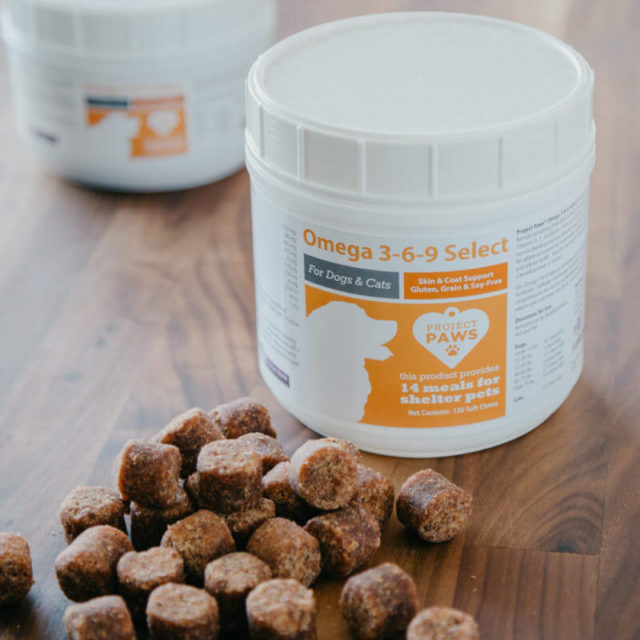
Project Paws® Omega 3-6-9 Select Chews offer the best balance of omega 3, 6, and 9 in a tasty chew that is grain-free, gluten-free, and soy-free. Many omega-3 products are made from salmon oil. Unfortunately, since salmon is so far up on the food chain, it tends to be highly contaminated with mercury. Our soft chews are made from sustainably-sourced krill, which is low enough on the food chain not to be contaminated with mercury. What could be better than that? Each purchase provides 14 meals for shelter dogs!
These statements have not been evaluated by the Food and Drug Administration. This product is not intended to diagnose, treat, cure, or prevent any disease. The information on this website is not intended to replace a one-on-one relationship with a qualified healthcare professional.
Summer is here, which means it’s time to enjoy the freedom of being outdoors, basking in the sun, and hitting the open road — often, with a canine companion by your side! So when it’s time for a play session, road trip, or cookout with your family and furry friends, what are the best ways to make those summertime activities a little more safe, comfortable, and fun?
From safety devices, to car ride gadgets, to health tips and more, check out these 8 of the best essential products and services that will help you make the most out of summer!
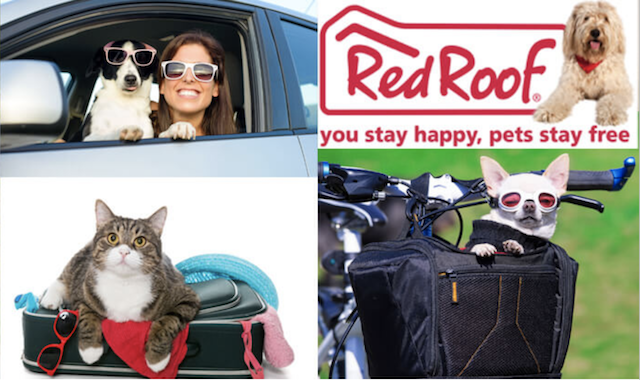
1. Best Lodging with Pets: Red Roof Inn
Summer is here, and many of us our itching to hit the road. And if you’re a doting dog parent, you’re planning on bringing Fido along for the ride, right? But where should you stay?
Not all hotels are pet-friendly, and although many claim to be, their policies aren’t always crystal clear and can be disguised with hidden fees. Bottom line: you may not always feel like your four-legged best friend is being welcomed with open arms.
Red Roof Inn is a leader in the economy lodging industry, serving millions of satisfied guests each year. Not only this, but they make it their primary goal to provide customers with super savings without sacrificing their comfort level–and that includes pets, too. With over 500 locations across the United States, Red Roof Inn is your premier lodging choice when you are making travel plans that include your pets. And your four-legged family members always stay free!
As a special treat for all of the iHeartDogs readers, Red Roof Inn will even give you an additional 15% off as a way of saying “thanks”and in hopes that you’ll make the wise decision to trust them–and your dog–in their care.
2. Best Product To Freshen Up Outdoor Spaces: Simple Green
You probably have cleaners and sprays for pet smells inside your home, but what about those odors that linger in your yard and on your deck? While enjoying a cookout with friends or a game of frisbee with the family, the last thing you want is a whiff of dog poo wafting from the yard!
That’s why every pet parent should be armed with Simple Green Outdoor Odor Eliminator to freshen up their outdoor space. This non-toxic formula quickly neutralizes and removes urine, stool, and vomit odors caused by your dog or cat, making it the perfect way to eliminate pet smells outside on your patio, dog run, deck, yard, and even artificial turf. Simple Green is safe to use around animals, pets, lawns, and landscaping when used as directed. Just attach it to your hose, spray the odors away, and enjoy the great outdoors with your loved ones!
Bonus for iHeartDogs readers: Get 25% off when you use the code word IHEARTDOGS on this link!
3. Best Food For A Four-Legged Family Member: NomNomNow
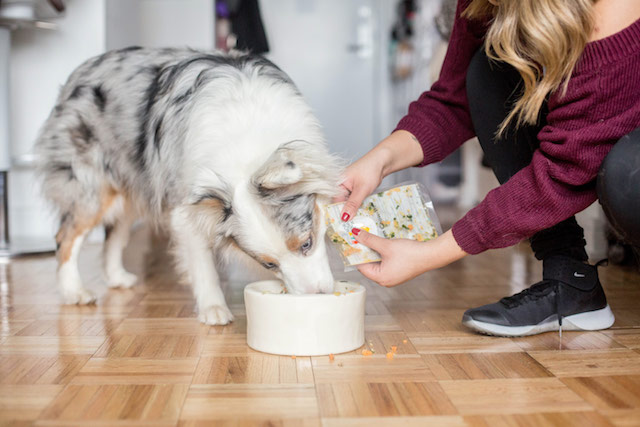
You love your furry friend like a family member, so why not feed her the healthiest food available? Formulated by a board-certified veterinary nutritionist with 100% human-grade wholesome ingredients, NomNomNow’s fresh dog food will delight your pup’s taste buds – and you’ll feel good knowing you’re doing what’s best for their health.
Every meal is gently cooked each week by a professional chef to retain its nutrition, then pre-portioned exactly for your dog’s specific needs. What’s more, it’s also cooked in the company’s own facilities, ensuring utmost quality control. NomNomNow is conveniently delivered right to your door for free to guarantee freshness, and you’ll never have to worry about running out of food!
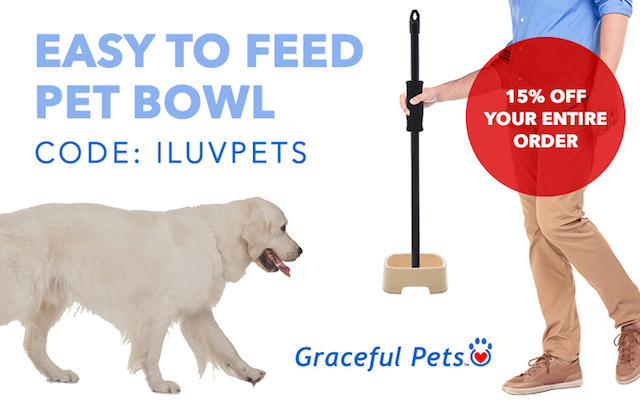
Does bending or crouching down to lift your pet’s food and water bowls activate aches, pains, and stiffness? Introducing the Graceful Pets Easy to Feed Pet Bowl… the ultimate reaching aid for pet lovers.
The Easy to Feed Pet Bowl comes with a removable handle that securely lets you pick up the bowl to fill with food or water, then simply return it to the floor without bending down. It’s perfect for anyone with back problems or that struggles with reaching the floor to pick up their dog’s bowl, a necessary task that can be a real “pain” for some pet parents!
Graceful Pet products are made in the USA from the same super-tough stuff as Legos, and most importantly, they’re free of BPAs and Phthaletes. If you or someone you know is a pet lover who suffers from back pain or problems with bending down, the Easy to Feed Pet Bowl is a must-have — especially when hot weather requires multiple water bowl refills!
What’s more, each purchase helps support a charitable cause. For every bowl sold, Graceful Pets will donate $1 to a help support a pet shelter or the Wounded Warrior’s Project. And right now, iHeartDogs readers will receive 15% off their Easy to Feed Pet Bowls by using the code ILUVPETS!
5. Best Way To Beat The Heat: The Cooling Gel Dog Collar
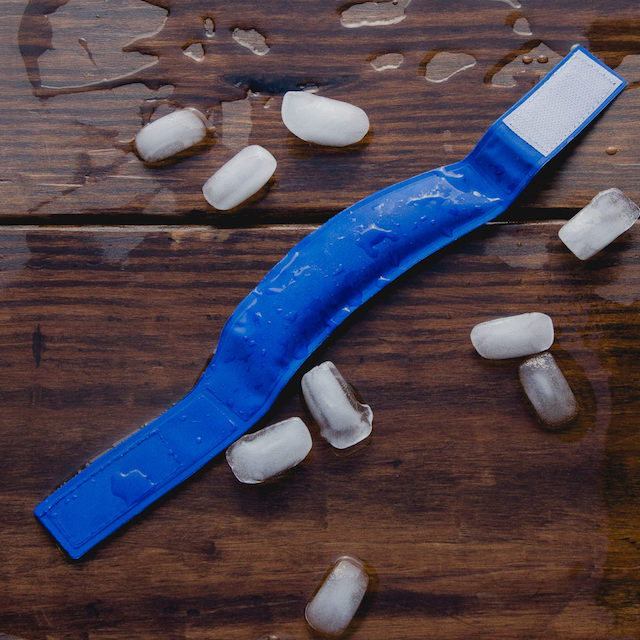
With their fur coats and love for playing, it’s no wonder that dogs can suffer heat stroke, especially on a sweltering summer day. In order to keep your canine comfortable — and ultimately, safer — consider equipping him with this cooling gel dog collar when the temperature soars!
Made of a durable taffeta with a Velcro® closure, all you have to do is place the collar in the freezer for 20 minutes or longer, and the special gel retains the coolness. The tough material can also be easily cleaned with a few wipes of a towel after outdoor play.
While this isn’t a guaranteed safeguard against heatstroke — dogs should always be monitored and have limited exposure to the heat — this Cooling Collar is a wonderful way to have Fido Feeling refreshed all summer long!
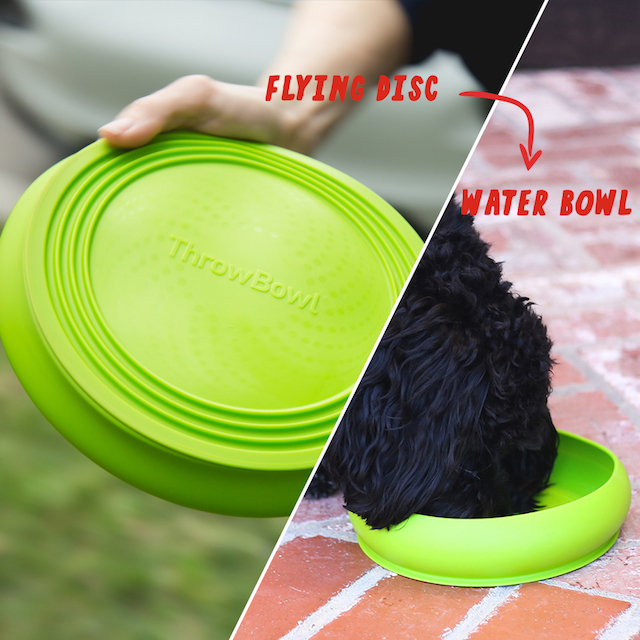
This handy two-in-one gadget is a must-have for all road trippin’ pet parents and their pups! Collapsed, it’s a fun frisbee your pooch can tug and fetch, then just pop out the bottom and fill it with water when it’s time for a drink!
The ThrowBowl™ is made of K9Flex® elastomer, a non-toxic, incredibly tough, yet soft material engineered by a leading U.S. rubber company. It’s puncture-proof yet also gentle on teeth and gums, has great flying ability in “disc mode,” and a deep, anti-splash form in “water bowl mode.”
When the sun is hot, it’s imperative that dogs (and humans!) stay hydrated, and with the ThrowBowl™, your pooch will never be without a drinking vessel. If your pup loves being a passenger on car rides, consider keeping one of these in your car!
7. Best Device For Road Trip Safety: Adjustable Dog Seat Belt
It’s not fun to think about, but we humans buckle up ourselves and our loved ones so that if there’s a car accident, we’re not thrown from our seats. Since we take this precaution every time we sit in a vehicle, doesn’t it make sense that we do the same for our dogs?
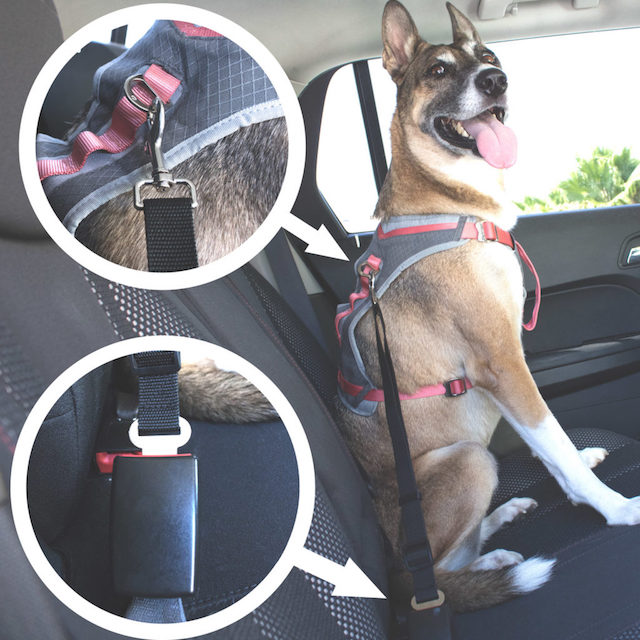
This easy-to-use, Heavy-Duty Adjustable Seat Belt clips right onto your dog’s harness so he stays comfortably restrained in case the unthinkable happens. In the event that you come to a sudden stop or are rear-ended, your pooch won’t be in danger of being thrown upon impact, hurting himself and possibly someone else.
For any car ride-loving pup, this simple piece of equipment is a must; after all, it could save a life! And with road-trip season here, you’re sure to use this safety belt a lot!
8. Best Way To Stave Off Tummy Troubles: Pronine™ Flora 4-in-1 Canine Probiotic
You’ve heard of the benefits that probiotics can offer humans, and it turns out, they can help in similar ways for dogs. Now, our pups should not be given human probiotics since our systems are different, but a supplement designed for dogs can help strengthen the good flora in their gut. And when their digestive system is thriving, a ripple effect of health benefits begins: probiotics can aid in digestion, strengthen the immune system, support liver function, improve coat and skin health, alleviate allergies, and more.
Containing probiotics, prebiotics, digestive enzymes, and digestive herbs, this digestive supplement is an excellent way to ensure your pet maintains a healthy level of the good bacteria essential in the gut to promote and support overall colon and bowel health. Project Paws® Pronine™ Flora aids in the absorption of essential nutrients for all-around health support.
If you think your companion could benefit from a boost in GI health, consider starting this summer when things like road trips, kennel stays, soaring temperatures, and drinking from communal water bowls can throw off their internal balance. In the midst of all the fun in the sun, the Pronine™ Flora can help keep their systems on track!
These statements have not been evaluated by the Food and Drug Administration. This product is not intended to diagnose, treat, cure, or prevent any disease. The information on this website is not intended to replace a one-on-one relationship with a qualified healthcare professional.

 3. For small dogs, grab their back legs and carefully invert their body so their head is facing down and their tail is toward the ceiling. Next, apply firm pressure right below the rib cage in short thrusts. Continue to check the dog’s mouth to see if something becomes visible.

 But even really well-behaved dogs may need to spruce up their