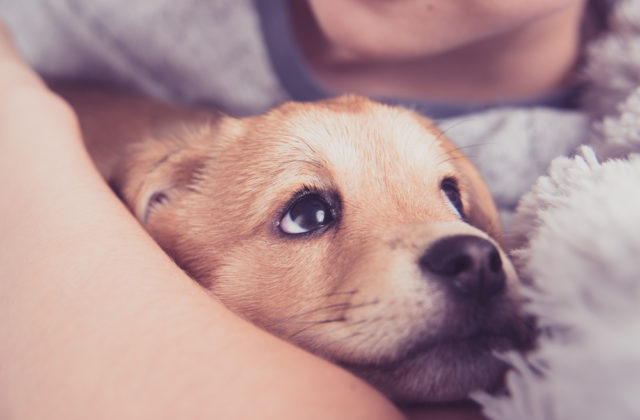
Latest Post

Have you met “The Smartest Dog in the World”? In 2014, 60 Minutes introduced the world to Chaser, a border collie with a vocabulary of more than one thousands words. Woah.Wouldn’t it be fantastic if your dog knew the difference between your shoes and boots and could bring them on command? You may not have the time (or patience) to teach your dog a thousand words. That’s okay. There are easy ways to increase your dog’s intelligence and decrease boredom if you’re not home. Before we suggest seven simple ways to make your dog smarter, you must first give your pet a strong base.


Start With a Solid Foundation of Training

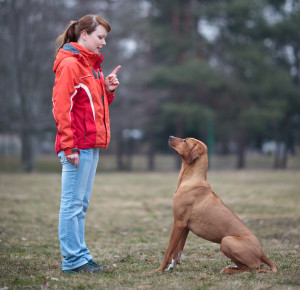
You may have taken your young pup to one or two obedience courses when you first got him. Did you stop training after those beginning classes? The old adage you can’t teach an old dog new tricks isn’t as accurate as you may think.

According to research from the University of Milan, the more you train a dog, the smarter they become. Researchers from the university’s psychology department conducted a study of 110 dogs. Half the dogs had minimal obedience training while the other half had much more schooling. The dogs were given a test to find hidden food. Even though their earlier training had nothing to do with hunting food, 60% of dogs with more training discovered the treats. Only 30% of the minimally trained dogs found them. Once you’ve taken your dog to obedience courses, you’re able to increase their intelligence with continued training.

Try these seven toys and games to make your dog smarter and less bored when you’re not home.


1. Sniff It Out

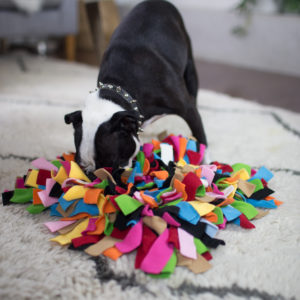
Time for a little nose work. The Sniff Diggy Mat is a great way to exercise your pup’s sensory and cognitive skills. Or try a modified version of the shell game. Start with one of your dog’s favorite treats. Once you’ve gotten her attention with the treat, show your pup three different cups. Hide the treat under one cup and switch the cups around until neither you nor the dog knows where the treat is hiding. Your dog probably doesn’t know this common “hustler” trick, so she’ll enjoy sniffing out the reward. Add some real incentive with these single ingredient beef liver treats – my dogs will do practically anything for them!


2. The Puzzler

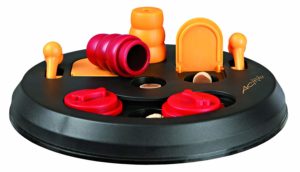
If you’d rather watch him interact with a toy, consider purchasing a puzzle to engage your dog. With more than 2600 reviews on Amazon, this TRIXIE strategy game was made to teach your dog cause and effect through flipping knobs and sliding disks. Like all dog training, the ultimate goal for your pup is nabbing a treat. By playing with this toy, your pet will use different techniques to get his reward. Consider leaving your dog with this toy when you’re not home to occupy his time.


3. DIY Agility Test

You can use items around your house (think: pillows, cushions, chairs, low tables) to create an agility course for your pooch. Yes, there are physical benefits to these tests, but there are intellectual perks, too. An obstacle course forces your dog to concentrate on the task at hand. He must be obedient to complete the course and earn his reward. Once your dog masters the test, change the course around to continue encouraging his intellectual growth.

4. Increase IQ Through Treats

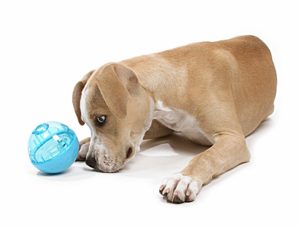
Another Amazon favorite for a pup’s brain development is the IQ Treat Ball. The inexpensive treat dispenser combines fetch with food. Your dog will benefit from mental and physical exercise with this toy. Fill the ball with kibble, toss it across the room. As the ball rolls, it will release treats. Your dog will be able to retrieve them from the ball, and you can increase difficulty by making the opening smaller. This is another one to leave with the pup when she’s home alone.


Need treats for training? Dogs love these single ingredient treats!


5. Hide and Seek

This game isn’t just for kids, it will also stimulate your dog’s mind. Before you can play, your dog needs to learn the “stay” command. Once she’s got that down, you’re ready to go. The rules are simple. Tell your dog to sit and stay. Find a hiding place. Call for your dog. When your dog finds you, offer her praise and a good ear scratch.


6. Stack the Rings

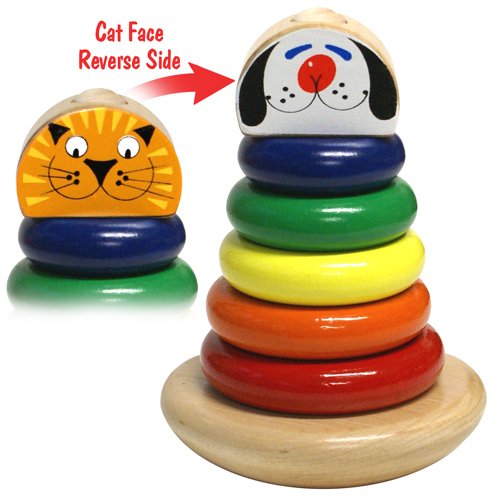
Another favorite for little humans and canines alike is ring stacking. Your dog may love playing with a ring stacker, too. Like other types of training, you can use a clicker to positively reinforce your pet each time he learns to place a ring on the stack. Of course, treats will encourage your pup along as he adds each ring. It may sound impossible, but check out this pooch stacking the rings. If your pup can do this, we’d love to see video or pics. My dogs seemed more excited about eating the rings, but I love ’em!


7. Pick Up and Drop Off

Get your dog to help with chores by training them to drop off toys in a basket. Like ring stacking, clicker training helps with this one. If you’ve taught your dog to “drop it”, you can slowly mold the behavior, one click and treat at a time. Start with one toy, and over time you can increase the number of toys they pick up and drop off in the proper location.

Learning isn’t just a lifelong habit for humans. If you want a smarter dog, you must encourage training and obedience throughout their life.


The post 7 Simple Ways to Make Your Dog Smarter appeared first on iHeartDogs.com.



via Whisker Therapy

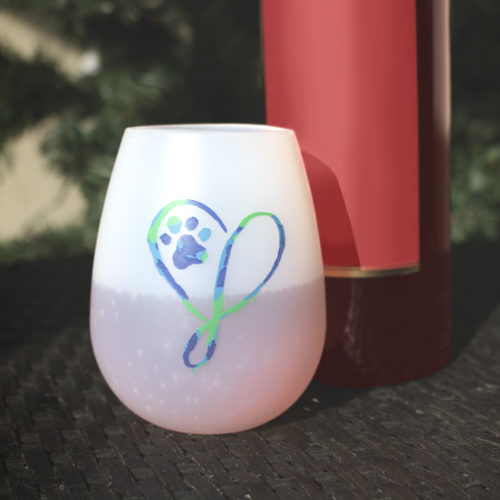
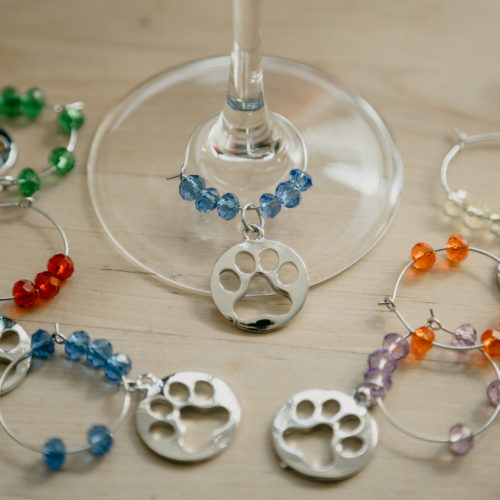
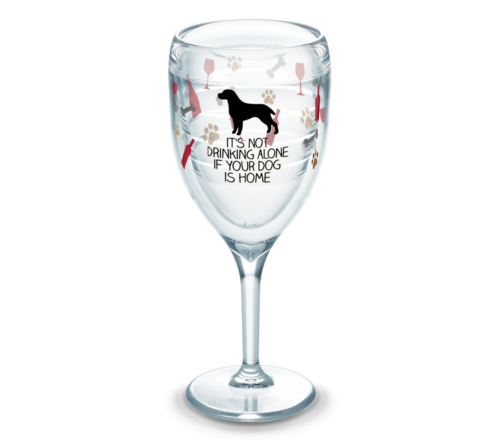
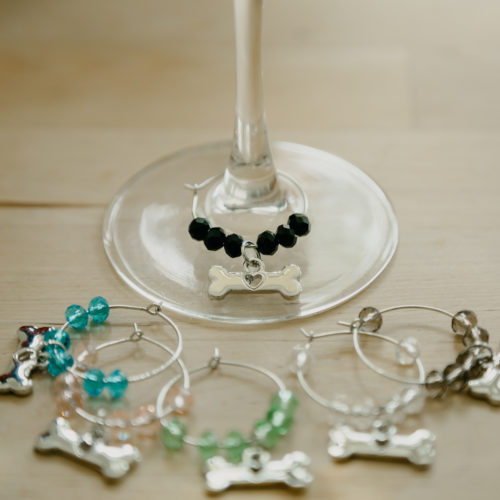
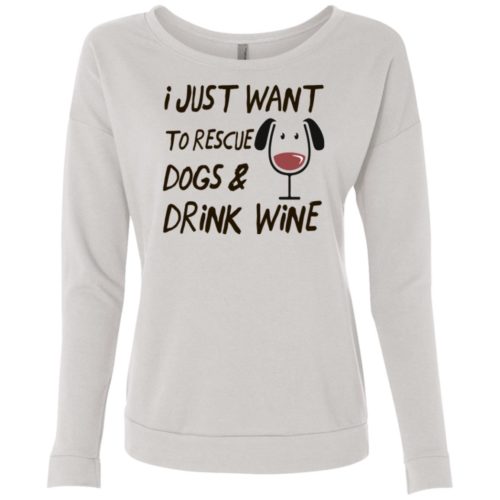
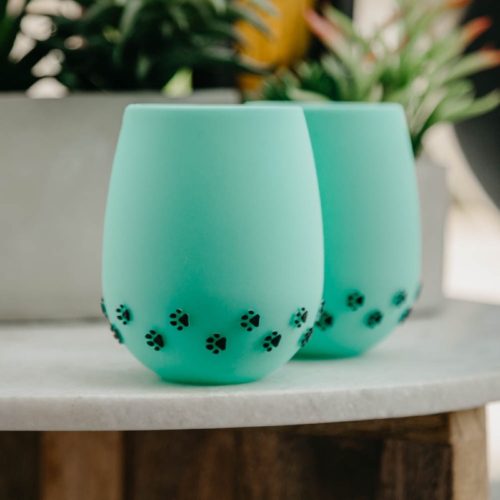
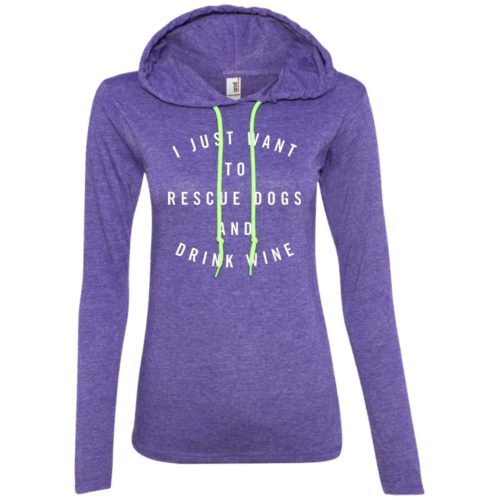
Let’s be honest: There are few things in the world that make us as happy as dogs and wine! Celebrate the love with these cute gift ideas sure to please all dog and wine lovers on your list.

And like all the items from iHeartDogs, each purchase provides food for animal shelters through GreaterGood.org!

The post 25 Gifts for People Who Are Crazy About Dogs & Wine appeared first on iHeartDogs.com.


via Whisker Therapy
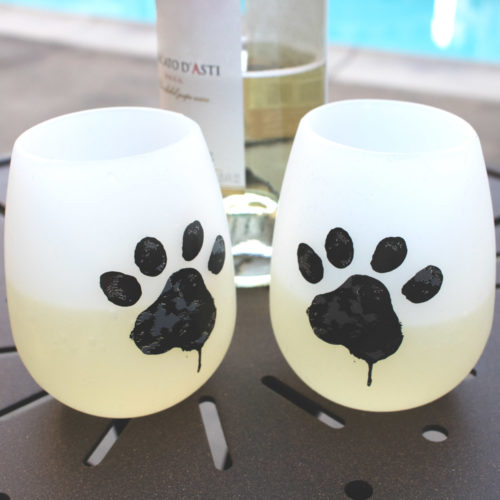
Ever heard, “Though she be but little, she is fierce!”? Shakespeare said that, and I think he was talking about dogs – maybe without knowing it. If you have a small dog then you know that size doesn’t really matter. In fact, small dogs have just as much spark, personality, and loyalty as their bigger canine counterparts – usually even more. For little pup devotees, you know what it’s like to have one of these peanuts at home. If you have a small dog burrowed on your sofa, you’ll definitely get a kick out of these 10 small dog fun facts.


1. The barking is real.

Did the doorbell ring? You’ll hear a bark. Did the garage door open? You’ll hear a bark. Did a loud noise startle your dog from their slumber? You’ll hear a bark. Actually, it’s a myth that small dogs bark more than larger breeds, but that doesn’t make those sounds any less attention-grabbing. All dogs are capable of barking. The good news is you can there are ways to prevent your pooch barking at every noise. Of course, your dog’s bark can signal a problem, so don’t be too quick to quiet your “home protection system” down. 


2. …but never call a small dog yippy.

If you want to upset the owner of a small dog, tell them their beloved pup is yippy. There’s nothing more annoying than someone classifying your little one this way. Yes, a Jack Russell Terrier’s bark has a certain bite, but that shouldn’t induce name calling. Smaller dogs have less weight to throw around, sometimes making their bark surprisingly loud. That doesn’t make them yippy. Think of it like this – a tuba produces a big, booming sound, while a trumpet produces beautiful high notes. So just enjoy the music.


3. Travel is a breeze.

No flying in the cargo hull of the plane for these guys. Ugh – could you imagine? Your small dog can slip into a travel bag and then walk through the TSA security checkpoint with you. Your pup never has to leave your side, except when you slide the carrier underneath the seat in front of you on an airplane or train. The only thing that’s tough to swallow is the exorbitant fee to bring your pet along for the ride.


Love small dogs that bring big smiles? Check out these 12 Small Dog Breeds With BIG Personalities!


4. They make excellent dining companions.

You never have to eat out alone when you have a small dog. Dinner al fresco for two? Why thank you! Little dogs fit right on your lap or by your side on the ground next to the table. Even if the patio isn’t spacious, there’s room for your little furry friend to dine, too. Also, many restaurants have little water bowls to keep your pup hydrated. Doesn’t get much better than dinner with your best bud.


5. Kids, take care.

They don’t call them “toy” breeds for nothing. The smallest breeds of dogs are often mistaken for stuffed animals or other toys by children. If you have one of these itty bitty breeds, you know it’s important to remind small children to be gentle. Little dogs need a bit more protection. But they’re also capable of immense amounts of love.


6. The shorter the legs, the shorter the walk.

The tiniest of dogs don’t need an hour of play or exercise a day. 30-minutes of combined walk time is enough for them. This comes in handy when the weather outside is frightful. When there’s a foot of snow outside or buckets of rain, your little dog doesn’t need to slog through it. All they need is a trip in and out for a bit of fresh air during inclement weather. But remember, there are plenty of small dogs that have hyper DNA and do need more exercise. So just because your doggy may be small, their need for exercise may be big.


7. Little dogs are popular with the masses.

Who doesn’t want to pet a little fluff ball? Because your little pup is so easy to transport, you can bring your best friend with you to outdoor restaurants, patios, parks, and on most public transportation. Retrieve your small dog from its carrier in the airport terminal and you’ll be swarmed by friendly visitors who want some doggy love. The little ones are less intimidating and often too adorable to overlook.


8. You don’t have to stop at one.

When dogs are this little, it’s easy to want more than one to keep you company. The small size pups are more portable and lower maintenance, so you can easily add another one to your family. Two little dogs eat as much as one big dog, right? The ratio may not be exactly 2:1, but food bills are much less for the little guys, so adding one more to the bunch won’t break the bank. And look at it this way – you’re getting twice the love! 


9. Dress them up or dress them down, they look good in whatever they wear.

Outfits can be everyday wear for the little pups. Clothing is not only for looking good. Small dogs get cold. Sweaters and other accessories to keep them warm and stylish can be addicting. A Great Dane in a tutu may look out of place, but a Yorkie with pink ruffles is adorable.


10. Small dogs make expert burrowers.

If your little dog goes missing, the first place you typically look is the throw blanket on the couch. Small dogs build a nest and cuddle themselves inside the soft folds with only their snout or eyes peering out. It’s adorable but worrisome when you call their name and they don’t respond immediately. But can you blame them for wanting to get cozy?


No two small dogs are made alike. But Shakespeare had it right when he said that though they may be little, they are fierce. Firecely loyal and loving, that is. There’s nothing better than cuddling up with a small, wherever you may take them. We’d love to see a photo of your pint-sized pooch. Share a pic down in the comments!

The post 10 Things Only Small Dog Lovers Will Understand appeared first on iHeartDogs.com.


via Whisker Therapy
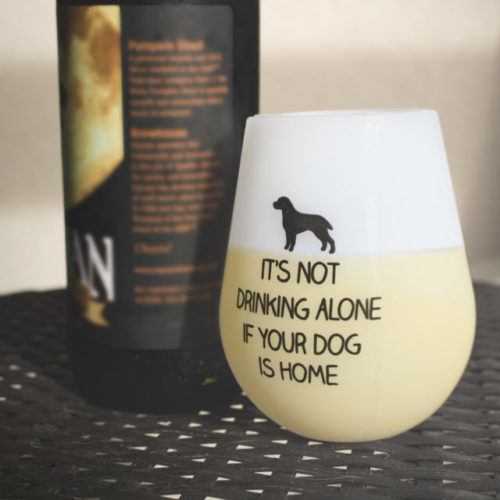
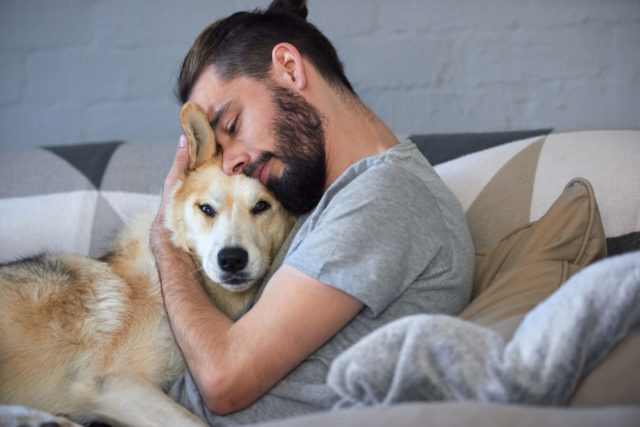
We’ve already talked about how dogs can help improve depression and your overall health, but new research is showing exactly how petting a dog affects our brains, and it’s just one more way that dogs make our lives better. Here’s how petting a dog impacts your brain, along with other ways dogs improve our lives.

How petting a dog impacts your brain

You might think that our brains process all the things we touch in the same way, but it turns out that isn’t true. The brain divides things that touch our skin into three categories: “pleasant,” “neutral,” and “unpleasant.” Each of these is interpreted in different ways in an area of the brain called the anterior cingulate cortex. This area of the brain is responsible for a lot of emotional processing, so a pleasant feeling on the skin elicits positive emotions.

Petting a dog also releases serotonin and dopamine, two feel-good chemicals that can improve your mood. Serotonin and dopamine levels are often low in people who suffer from depression, so having a dog can help improve symptoms in depression sufferers.

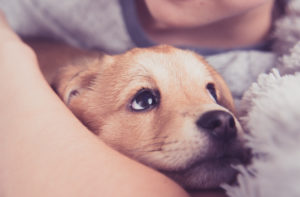
Better than that, staring in the eyes of a dog you know releases oxytocin – the hormone that helps bond a mother and child.

How dogs affect our bodies

Therapy dogs have been proven to reduce the stress in students taking exams, people grieving the loss of a loved one, children in the hospital, and people traveling through airports. Stress releases cortisol into your bloodstream, a hormone that can cause all sorts of negative impacts on your body. Petting dogs has been shown to decrease the levels of cortisol in your bloodstream.

Having a dog can also reduce your blood pressure and the chances of dying from a heart attack. The companionship provided by a dog can also reduce levels of anxiety.

People who own dogs walk more than people who don’t, which helps prevent obesity and the health risks that go along with it. Walking your dog during the day has the added benefit of getting vitamin D from the sun, and a lack of sunlight has been proven to have a negative effect on people’s mental state.

Growing up with a dog has also been shown to reduce allergies in children by giving their immune system something “harmless” to practice on.

The importance of touch to people

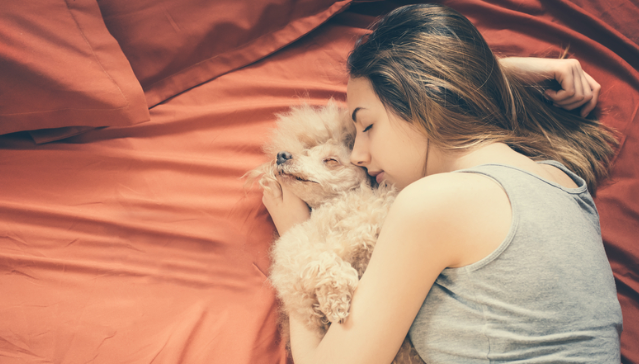
People are programmed to need touch in their lives. Friendly, supportive touch from other humans has been shown to reduce stress, lower blood pressure, and release serotonin, dopamine, and oxytocin – all the same things that petting a dog does. In the absence of enough human touch, petting a dog can fulfill that deep need we all have to be touched.

We already know how much dogs improve our lives every day, but it’s always cool to see science confirming what dog lovers have known for years – nothing is better than the love of a dog!

(H/T: Bustle, Petable)

The post New Research Shows That Petting Dogs Is Like A Drug For Our Brains appeared first on iHeartDogs.com.


via Whisker Therapy
Contact Form

Name

Email *

Message *

Theme images by Storman. Powered by Blogger.