Latest Post

One in three dogs will become lost at some point in their lives. The ones lucky enough to reunite with their families often have a good Samaritan to thank. But not everyone knows what to do. Here’s how to recognize when a dog needs your assistance, and how to help them find their way home again.

Recognizing The Different Kinds Of Lost Dog

You may be wondering how to tell if a dog is really lost. After all, some people allow their pups to wander, especially in more rural areas. Here are the four types of dog you may encounter:

1. The Pro

This dog is either a master escape artist or his owner allows him to roam free. He will appear confident and secure in his surroundings. He may follow the same route each time, stopping to leave his “signature” along the way. While these dogs may still become lost or injured, they tend to be sharper than indoor dogs. They typically know to avoid traffic and head home by dinner time.

2. The Cheater

These goofy dogs love everyone and may eagerly hop into your car at the first offer of help. While they are easy to catch, they are vulnerable to dog-nappers and well-meaning Samaritans.

3. The “Feral” Pup

This dog is in survival mode. She believes no one can be trusted, and may growl or snap if cornered. It is important to know that this behavior does not necessarily mean she’s been abused. Many dogs revert to a semi-wild state and avoid human contact when lost. This dog may be a long-time stray, a victim of neglect, or a well-loved pet.

4. The Runner

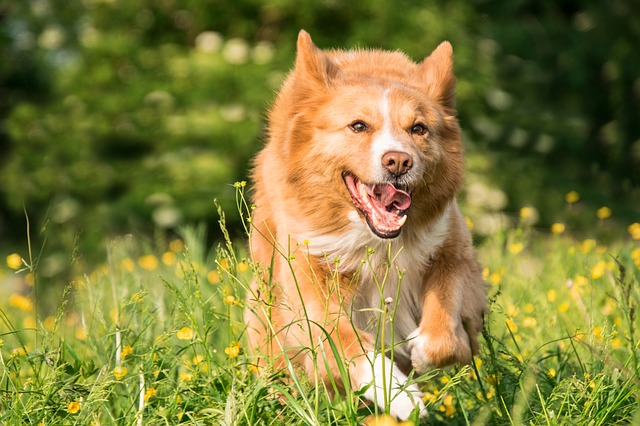
The runner is not only the most challenging, he is also at the highest risk of injury. Chances are this dog became lost during a loud thunderstorm or when someone set off fireworks. They take off in a pure panic, running fast and far with no regard for danger. Often times they run so far they are not able to find their way home once the stressful event has passed.

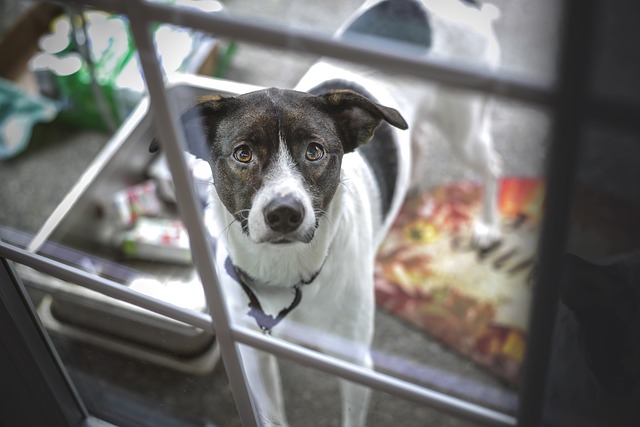
lost dog running

Bringing A Lost Dog To Safety

The type of lost dog you are dealing with will determine how difficult it will be to catch. Observe the behavior and body language. Remember, most dogs will not allow you to capture them without a fight.

Here are a few tips for a successful rescue:

  • If you do not have a leash, a length of rope or a long scarf may do in a pinch. Create a loop you can slip over the dog’s head and tighten.
  • Never chase, grab or corner a skittish dog! This may result in them snapping at you, bolting into traffic, or becoming even more lost.
  • If the dog moves away from you, track it from a distance, keeping it in sight at all times.
  • Earn the dog’s trust with slow, deliberate movements.
  • Speak gently and offer treats if possible – a fast food hamburger goes a long way in these situations!
  • Be patient. Capturing a lost dog can take hours, sometimes even days.
  • Don’t give up. You would want someone to do everything possible to rescue your pet. Do the same for theirs.

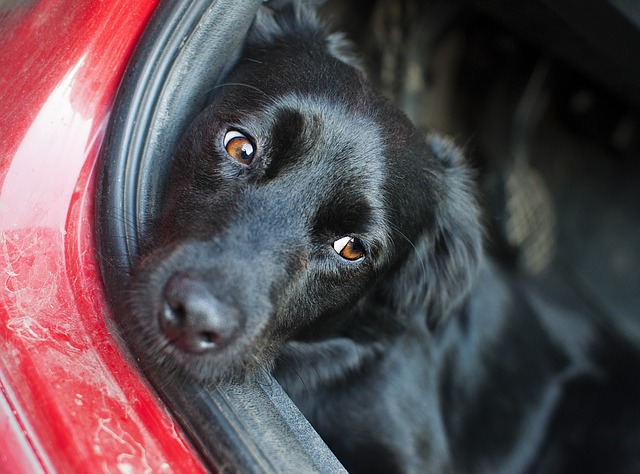
dirty lost dog

A Note About Animal Control

If the dog is injured, behaving aggressively, or you are unable to capture it on your own, call your local animal control department for help. However, if you can avoid this call, it may have a better outcome for the dog.

Animal control officers work for the city or county and the dogs they pick up go to government shelters. Many of these facilities are open-intake or “kill” shelters. They cannot turn animals away, but may have to euthanize otherwise healthy pets due to lack of space.

The holding period for strays varies, but may be as short as 48 hours. If the dog is not claimed during the stray hold period, it may be put up for adoption or put to sleep. Think of what you would want for your pet. What if the owner is in the hospital or out of the country, completely unaware their dog has gone missing?

Segregate The Lost Dog From Your Own Pets

Should you decide to bring the dog home with you while you search for its owner, be sure to keep it separate from your own pets. This is important because:

  • It may behave aggressively. Just because the dog is calm and gentle with you does not mean it gets along with other pets. Also, a stressed dog is much more likely to act out.
  • It may be carrying parasites or infectious diseases. There is no way to know if the lost dog is carrying a deadly virus like parvo. Even a respiratory infection or flu could potentially affect your pets. In addition, the dog may have picked up fleas, ticks, skin mites or intestinal parasites. Not only can these little buggers infect your pets, they can also be transmitted to you and your family!

Steps To Help You Find The Owner

Now that the dog is safely in your care, it is time to begin searching for an owner. This may seem like a daunting task, but it helps to take it one step at a time:

Look For Identification Tags

Is the dog wearing a collar? Tags with the owner’s contact information are best, but a Rabies tag or Microchip ID tag can also help you track them down. A Rabies tag should have the phone number of the vet who gave the vaccine as well as a unique number that can be traced. Microchip tags also have the phone number of the manufacturer as well as the ID number of the dog’s chip.

Speaking Of Microchips…

Just because the dog does not have a collar of tags does not mean he or she is not microchipped. Bring the dog to a local shelter or vet’s office and ask them to check with their universal scanner.

File Found Dog Reports

Let your local shelters, veterinary hospitals, and animal control know that you have found a lost dog. You may also want to alert your Home Owner’s Association, local groomers, etc.

Post Online

Say what you want about the internet, but it has worked wonders for lost pets! Not only are there several websites for reuniting dogs and cats with their owners, online advertising sites and social media have proven invaluable.

Create “Found Pet” Fliers

Not everyone uses the internet or social media. The old-fashioned flier method may just do the trick. Be sure to include photos of the dog as well as where it was found. Hang these around the community and share them with local shelters, vets, and other pet businesses.

post a lost dog online

What To Do If An Owner Cannot Be Found

If you exhaust all your resources with no luck, it is time to decide what to do next. You may opt to keep the dog, turn it over to a local shelter or rescue group, or attempt to re-home it yourself.

If you decide to keep it, ask yourself if you are willing and able to properly care for another dog. Can you provide enough exercise and enrichment? Will the dog be a financial burden? If you are unsure, it may be best to contact a reputable shelter or rescue and discuss your options.

transporting a lost dog

Other Things To Consider

Try to keep an open mind.

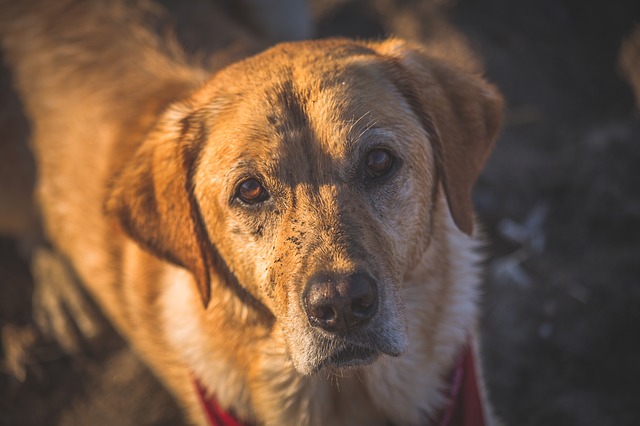
The lost dog you help may be in rough shape. It may be dirty, underweight, sick or injured. It may behave as if it has been abused. However, there is no way to know how long the dog has been out on its own or what it has experienced.

Just because the dog shows signs of neglect, does not mean it does not have a loving owner. Perhaps the dog ran away during a loud thunderstorm or was stolen and then dumped. Give the owner the benefit of the doubt until you have all the facts.

Be aware that the dog may be very far from home.

iHeartDogs has shared several stories of lost dogs found hundreds if not thousands of miles from home. Keep this in mind and consider widening your search.

Require proof of ownership if someone attempts to claim the dog.

Sadly, some people use lost dog postings to run scams or exploit the animals for breeding or dogfighting. If a person contacts you claiming to own the dog, ask for proof of ownership in the form of photographs of them with their pet, veterinary records, or adoption records. You can also hold back a distinctive trait such as a scar or other identifying mark to ensure the person truly knows the dog.

The post How To Help A Lost Dog Find Its Way Home Again appeared first on iHeartDogs.com.



via Whisker Therapy

Having live plants in your home not only adds beauty and a nature to your interior, it can make your home a healthier environment. Plants purify the air inside your house as they take in CO2 and “breathe” out pure oxygen. What many dog moms don’t realize is that many houseplants are toxic to dogs. In an effort to make your home more inviting and healthy, you could be introducing a toxin to your fur baby. We know you don’t want that, so we pulled together a list of very pretty, vibrant houseplants that can give your home a pop of color without any risk to your pupper.

1. African Violet Plant

The deep purple flowers and fuzzy dark green leaves of the African Violet contrast beautifully. They are small enough to fit on even the smallest shelf or table, making them a great choice for any space. Best of all? They are completely harmless to dogs and humans. You can feel great about this vivid little houseplant in your home.

Image Autumn All Along Pinterest

2. Prayer Plant

These slow growing, low light needing beauties are a great choice for a home with dogs. They are perfectly safe for your pup. On top of that, the leaves of the Prayer Plant are variegated, meaning they have a variety of colors on them. With light and dark greens as well as a bright red hue, these plants bring in a spot of color to any corner.

Image Gardening Know How Pinterest

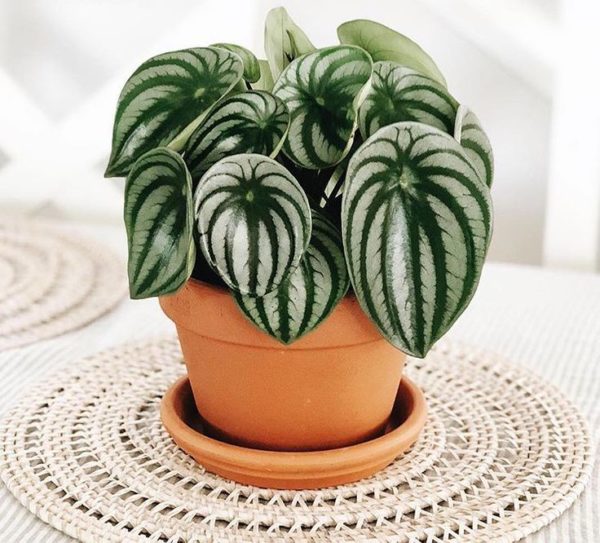
3. Peperomia Plants

One of the best things about this group of non-toxic houseplant is that they are super easy to care for. Even a novice or someone without the slightest green thumb can keep these plants alive. Their leaves are so lovely with hints of yellow, cream, red and various green tones. If you have a curious pup who wants to take a munch of these leaves, it will be perfectly safe for her to satisfy that interest.

Image Andrea’s Organic Market Pinterest

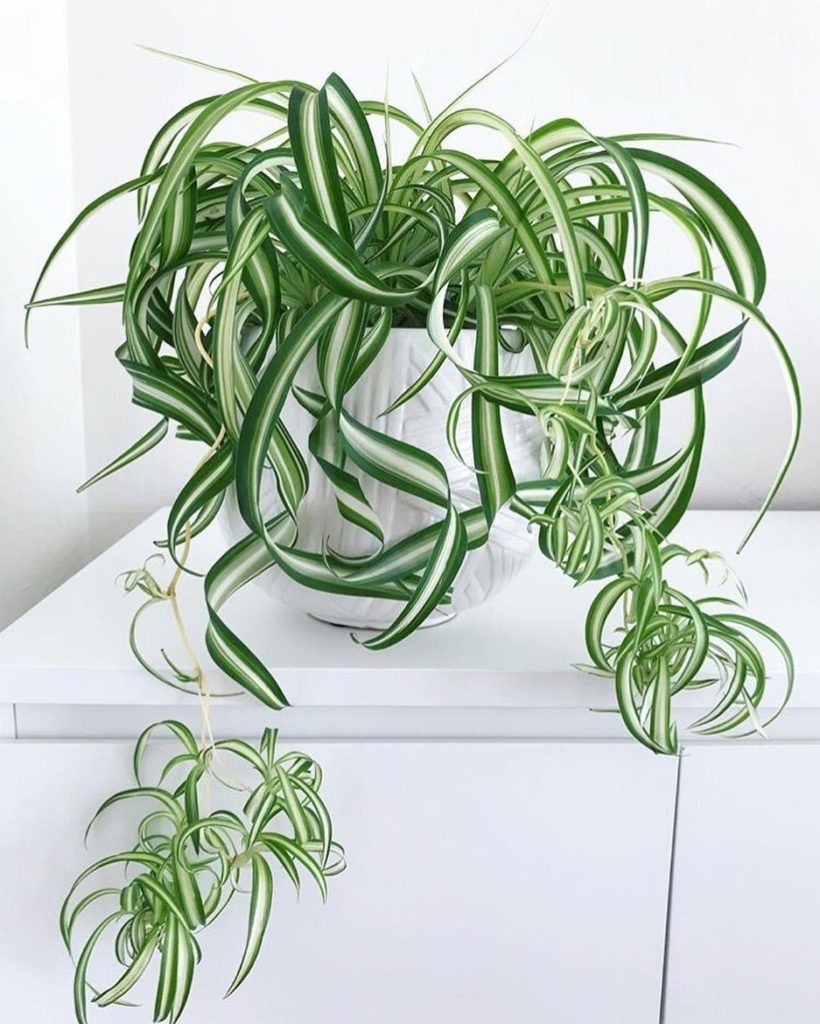
4. Spider Plant

These plants have major impact with their spiky, variegated leaves and dangling mini-plants that resemble spiders. They grow downwards which makes them great on a high shelf or in a hanging basket. They are easy to take care of because they like to completely dry out between waterings. You can feel comfortable with these unique plants in your home. They are completely safe for dogs.

Image Mulhall Pinterest

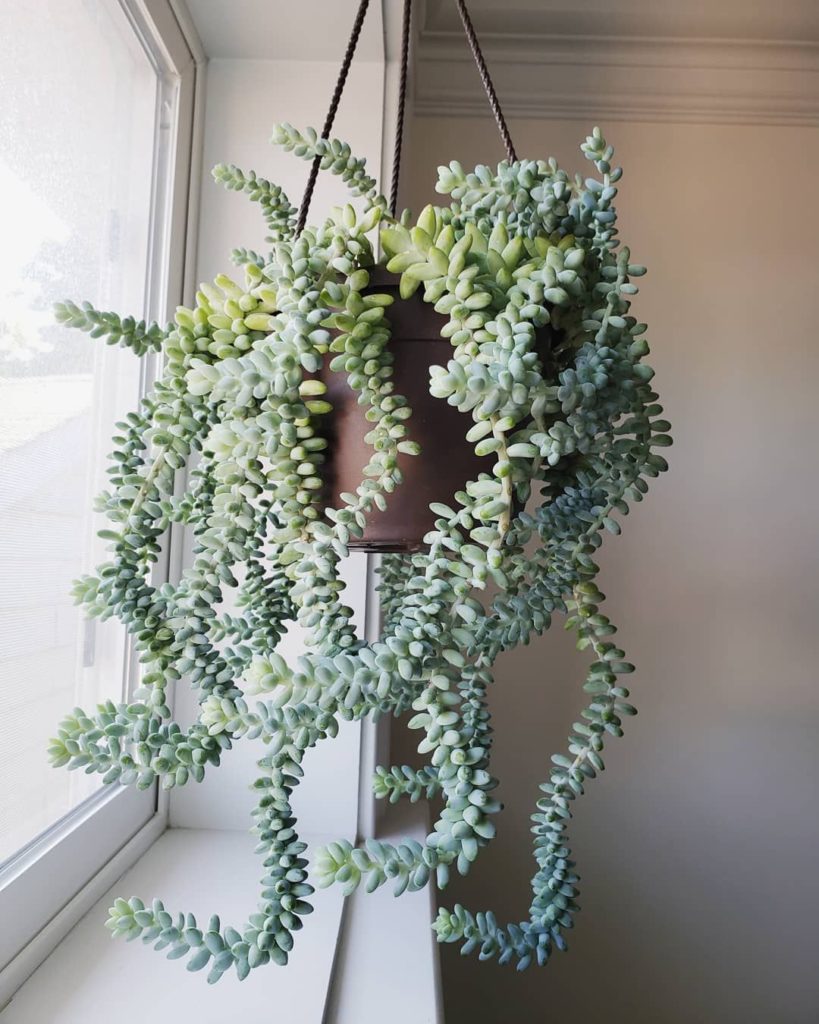
5. Donkey Tail Plant

This very unique looking plant is a succulent. Animals tend to avoid eating succulents in general, but if your pup decides to take a taste, this one will prove completely safe. The branches spread out in long, tail-like strands that can create a dramatic effect in your home. Naturally, it is easy to care for. Succulents require very little water. Just put them in a sunny spot and they will thrive.

Image Succulent City Pinterest

Beware The Dangers Of These Common But Potentially Deadly Houseplants

Here are 11 more dog friendly houseplants that will add some color and life to your home:

  • Boston Fern (Nephrolepis exaltata)
  • Ponytail Palm
  • Hibiscus (Hibiscus syriacus)
  • Air Plants
  • Friendship Plant
  • Watermelon Plant
  • Wax Plant (Hoya carnosa)
  • Haworthia (Haworthia)
  • Christmas Cactus (Schlumbergera bridgesii)
  • Staghorn Fern (Platycerium)
  • Parlor Palm (Chamaedorea elegans)

Enjoy the benefits of cleaner air and a more inviting home by incorporating these houseplants into your decor. They are non-toxic and completely safe for your fur baby, so you can feel confident having them around even the most curious of pups.

Featured Image Mind Body Green Pinterest

The post 16 Dog Friendly Houseplants to Add Color to Your Home This Summer appeared first on iHeartDogs.com.


via Whisker Therapy

Learning how to train your dog to stay is one of the most important skills you can achieve as a dog-owner team. Not only is having this control extremely satisfying as a dog owner, but it is vital in helping keep him safe when situation arise that would otherwise be dangerous and potentially lethal. While it was okay for Underdog to sprint towards danger saying, “Never fear, Underdog is here,” uncontrolled curiosity and charging put mortal dogs at risk.

When distractions or danger appear for a well-trained dog, a simple command sends him into a sit position where he stays quietly until released. A well-taught stay command means that dog owners don’t need to be worried about what is going on around them because their dog will remain in the stay position until the release signal is given.

Tips for Learning Sit-Stay

Service dogs are recognized masters of this skill but every dog is capable of maintaining the stay command and many other basic commands. Obedience training is the foundation that uses positive reinforcement, treats, and consistent communication to achieve this.

Start with these simple tips on how to train your dog to stay.

Be in a Positive Mental State

To set the stage for successful training experience, the trainer (usually the owner) should be in a positive frame of mind, and should be focused on a win-win outcome. Don’t attempt a dog training session if you’re stressed from a horrible day at the office or irritable from being up with a teething baby all night. Dogs are very intuitive creatures and can sense that you’re a bit off and will attempt to skirt the rules.

Allow Plenty of Time to Teach Your Dog

Like any other educational activity, neither party should feel rushed during a dog training session. So, carve out a generous block of time, and ensure that you won’t have to cut the teaching experience short to dash off to another commitment. Be aware of the dog’s body clock as well. If his attention span tends to lessen as the day goes on, schedule the training exercise for the morning hours when he’s generally more alert and attentive.

Note: Even the best training sessions don’t change behaviors overnight. You’ll need to consistently train to properly condition your dog.

Start Your Dog Training in a Quiet Place

Create a training environment that’s conducive to a good outcome by choosing an out-of-the-way spot that will minimize the chance of interruptions. For example, consider teaching your dog to stay in a family room or in an enclosed backyard. Discourage family members from interrupting these interactive learning sessions.

Teach Your Dog to Sit on Cue

After your dog learns the simple “sit” sequence, he’s in a great position to tackle the stay, down, and heel challenges. But, first things first. This easy-to-follow cheat sheet incorporates the desired action quickly followed by a reward. If you consistently practice this technique with your dog, he’ll gradually regard it as a habit rather than a task.

Teach Your Dog The Sit Sequence

The sit sequence is the first step to developing your dog’s ability to stay:

  1.  Place a small treat in your hand, and kneel down in front of your dog.
  2.  Hold the treat next to the dog’s nose.
  3.  Raise your hand so the treat is just out of reach.
  4.  Instruct your dog to, “Sit.”
  5.  If your dog tries to snap up the treat, gently guide his backside into a sitting position with your other hand.
  6.  When the dog sits down, firmly say “Sit.”
  7.  When he performs the proper action, reward him with and a treat and phrase, “Good boy.”
  8.  Repeat the sit sequence training several times daily for fastest results.

Using Treats or Other Rewards

When you’re teaching your dog to sit, and he performs the desired action on cue, give him verbal praise by saying a short word such as “good” or “yes.” Or, engage in some clicker training by using a small device that makes a short staccato sound when it’s pressed. After saying the positive reinforcement word or pressing the clicker, follow up with a reward. Always perform the sequence in the same way, as that helps the dog to link the two actions together.

Food Rewards

When choosing a food reward, realize that your dog probably doesn’t value every food equally. High-value treats keep his attention and create a better training session. For example, he might not assign much value to small pieces of dry kibble. However, your dog’s nose can probably sniff out those gourmet dog treats, which will likely score much higher on his value meter.

Regardless of your choice, use very small treats that won’t affect his appetite. Using small-size snacks also lessens the chance that he’ll keep chewing away rather than watching your actions.

Other Types of Rewards

Let’s say your dog seems to love his special toy more than his food. Or, perhaps he’s a pushover for belly rubs and back massages. Or, maybe he prefers a good game of fetch to any other form of exercise. Whatever his passion, turn it into a sought-after commodity that he receives after performing a proper sit.

Teach Your Dog to Stay with Short Training Sessions

After your dog regularly displays the correct sit behavior on cue, he’s ready for the next dog training challenge: Mastering the stay sequence. This action is completely contrary to his natural desire to roam around the room, checking out his surroundings and getting acquainted with the people around him. In other words, you’re about to teach him a lesson in self-control.

Teach Your Dog The Stay Sequence

  1. Once your dog masters sit on command, he is ready to learn the stay sequence.
  2. Give your dog the sit command.
  3. Place a treat in your palm. Extend your hand in front of you, with your palm facing up.
  4. Firmly instruct your dog to, “Stay.”
  5. Take a step backward.
  6. If your dog continues to sit, give him verbal praise and a treat. (Note: Do not praise him if he is in a posture ready to move forward or get up otherwise you are praising him for making up his mind to move before you give him the signal to do so.)
  7. Repeat the sequence, adding more backward steps each time.
  8. Consistently recognize your dog for performing an appropriate stay whether it’s for a short time or longer periods.

Throw in a Few Distractions


Once your dog seems comfortable with the sit-stay sequence and performs the proper actions for short periods, test his attention span by introducing a series of distractions. First, cue a family member or other familiar person to casually walk into the room, ignoring the dog while completing a task or picking up an object.

Next, ask someone to snack on a desirable food while sitting near the family food hound. Finally, bring another leashed dog into the training session, and see if that makes your dog break his concentration. If your dog moves and abandons his exercise, no worries. It simply means that he needs more practice.

Keep Up the Positive Reinforcement

To help your dog turn his sit exercise into an ingrained habit, give him the sit command at different points throughout the day. Always teach the two-step sequence in the same way, providing a tasty treat or fun experience after he displays the correct behavior.

Although your dog doesn’t realize it, he’s a partner in an ongoing positive transformation exercise. Basically, you’ve given him a reward to increase the chances that he’ll perform the correct action every time you ask. Over time, communication with your dog should become easier, and you might also enjoy a higher degree of mutual respect.

Treat Your Dog to a Walk or Other Exercise

Reward him with what he loves most after training sessions to let him burn off steam from focusing for extended periods of time. Leave the house, and take him for a long walk around the neighborhood, or start an energetic game of fetch or tug-of-war with him. If he’s a water-loving pooch, take him to the lake for a refreshing swim or “retrieve the tennis” ball game. When you’re training your dog, these fun activities can serve as another reward and important bonding time.


Structure the Dog Training Sessions

To get the best results from the dog training experience, take your dog’s natural inclinations and learning style into account. Some dogs have the capacity to maintain long training sessions while others need to start with short sessions and grow into longer ones.

Follow these simple teaching guidelines that set the stage for success:

  • Aim for short training sessions, as dogs typically have short attention spans. Ideally, each training session shouldn’t last for more than 15 minutes. Within that time frame, cue the sit and stay behaviors multiple times. In addition, start incorporating this skills practice into your dog’s normal routine. As an example, cue your dog to sit before you present a brand-new toy or dental treat.
  • Use the same exact teaching commands for each sequence. Stick to the same word or phrase, delivered in the same way each time. Ask other family members to follow this practice as well. Human consistency is critical for dog training success.
  • End each training session with a skill the dog does well. Don’t keep going, as you (and/or the dog) will eventually become frustrated or bored with the whole exercise, and that will negatively affect the session’s outcome.
  • Take your practice sessions into different settings. If you want the dog to demonstrate the correct behavior everywhere he goes, take him out and cue him to practice his sit and stay skills in varied locations. Choose different rooms, or leave the house and walk him into the yard. Visit several friends’ homes, and take him to the dog park – and everywhere else he’s likely to go.

Five Valuable Benefits of Obedience Training

There is so much to be gained when dogs are properly trained. It builds a relationship of trust between dog and dog owner that keeps dogs safe, allows them to interact and do more with the family, and satisfies the mental growth needs of dogs. Dogs and dog owners are happier with successful obedience training.

Here are five benefits of obedience training:

Better Bonding Experience

It’s not much fun trying to control an unruly dog who won’t listen to simple commands. Maybe your dog jumps, and constantly pulls and tugs on his leash during his daily walks. Indoors, he burrows into the trash and commits other acts of mischief. These maddening episodes cause considerable frustration for dog owners everywhere, making it difficult to enjoy a loving pet ownership experience.

After consistent obedience training, however, dogs become conditioned to react on cue. Once he has mastered basic commands and learned the fine art of impulse control, he’s more likely to be a good citizen when out in the general public making it easier to take him more often. That good behavior leads to happier dog owners and a more satisfying bonding experience.

More Manageability

After your dog has mastered basic obedience commands, you can better integrate him into family activities and other social events. If he can greet other people without leaping on them, walk on a loose leash without pulling wildly in every direction, and come when he is called, he’ll become a delight to have around rather than a misbehaving delinquent who stays at home in a crate.

Improved Socialization

Dogs are naturally curious and sociable creatures who generally operate within a pack structure and defer to their pack leader. Whenever they meet other dogs, each dog’s actions reflect their perception of their social position compared to the other dog(s). Each dog’s actions also send cues on how well they’ve been socialized and whether they’ve learned what’s “acceptable” and “non-acceptable” in the dog world.

Here’s where some well-rounded dog training can help. After you teach your dog basic commands such as sit and stay and gain increased control over his actions, he’s ready to meet other dogs in safe situations. Whether he gets acquainted with a friend’s dog while on a leisurely walk or on romps with other same-sized dogs at the dog park, each interaction will help him to become more comfortable with dog dynamics.

Increased Safety and Well-Being

You always want to keep your dog safe and out of trouble, whether he’s at a family get-together or enjoying his daily walks along a well-traveled neighborhood street. When his actions are more predictable, and he has become accustomed to following simple commands, he’s much less of a danger to himself and the people and dogs around him. After training your dog, he’s less likely to bolt off the leash and into the neighbor’s garden or into potentially disastrous traffic.

Extra Owner Socialization Opportunities

Pet parents can also benefit from regular socialization with other dogs and pet parents. A busy professional with a demanding schedule or a parent who juggles multiple family commitments might welcome some time with other dog owners. Everyone’s can trade stories of their dog’s successes (and ongoing challenges) to test other ways to succeed with training. In other words, obedience instruction provides a win-win outcome for everybody.

Fewer Puppy Problems

Puppies are some of the most charming creatures on the planet. These cute fluffy balls of fur are like liquid energy, as they never stop moving and seem determined to get into mischief every chance they get. As appealing as your puppy is, however, he can’t distinguish between right or wrong behavior, so his owner must take time to teach him the rules of the road. He might also benefit from some crate training.

Of course, training your puppy must take his short attention span into consideration. So, aim for no more than 15 minutes of training at a time and consider splitting sessions into five-minute time blocks throughout the day. Ask every family member to work with him, and repeat each training behavior everywhere in the house.

After he becomes familiar with the basic sit-stay sequence, plus several other desirable actions, integrate those tasks into every part of his life. For example, cue him to sit before you present his food bowl, as this helps to prevent future begging episodes. If he learns that he must sit before you open the door to go outside, he’ll be less likely to sprint out the door when a friend stops by to visit.

Although training any puppy takes time and patience, it pays off exponentially in the bonding and quality time that a dog and his owner experience together. Good obedience training helps cue emerging behavior problems to thwart them before they become hard-to-reverse habits. Group training additionally helps socialize dogs with other people and dogs in a safe, controlled setting.

Risks of Not Teaching Your Dog to Stay

Effectively training your dog requires considerable time and dedication, and you must be in it for the long haul. In other words, it’s not realistic to expect your dog to perform perfectly when his partner doesn’t consistently take the lead in dog training exercises.

What’s the worst that can happen if you don’t get this command down right?

If you don’t teach your dog to sit and stay he won’t get the structure and discipline that should keep him from running amok in the house and when outside. He becomes a danger to people, other dogs, and himself by not being in control.

An out-of-control dog leads to car accidents, dog fights, and unintentional injury to others by jumping on people and pushing them down. Dog owners are liable for their dog’s actions and are required to keep them controlled. Your dog also deserves to be trained in a way that keeps him safe and healthy. He doesn’t know what a car will do to him; you do.

Make a commitment to ongoing dog training that develops control with sit-stay commands and extends to other skills such as don’t touch and leave it. Consistent training over time creates healthy dog habits contributing to a better quality of life for everyone in your family.

The post How to Train Your Dog To Stay appeared first on TheDogTrainingSecret.com.


via Whisker Therapy

Contact Form

Name

Email *

Message *

Theme images by Storman. Powered by Blogger.