Latest Post

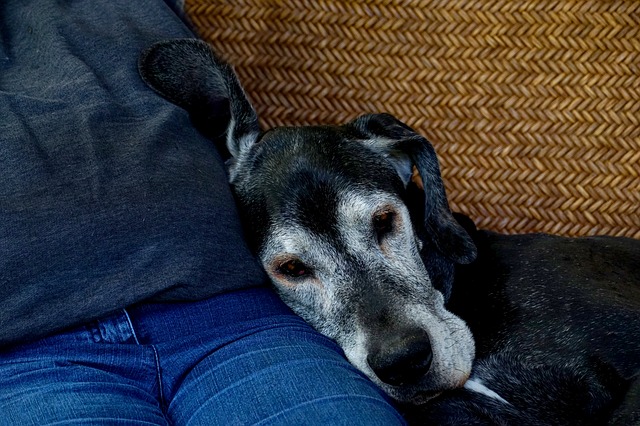
Dog's name and age: Zooey, 2 years old

Can you tell us how you named her? Zooey is named after the actress Zooey Deschanel because of her jet black coat.

Tell us what things she enjoys the most: Zooey has a BFF named Moji that she gets to play with about once a week. They roughhouse like crazy and exhaust each other. The best workout in the world! She also loves her Friday morning socials. We head to our favorite neighborhood park where she knows all the dogs.

Tags: 


via Whisker Therapy

President George H. W. Bush gets a service dog

Former President George H. W. Bush has just received a service dog—a Labrador Retriever named Sully. Bush was a World War II navy pilot, so it’s fitting that his dog is named after Chesley “Sully” Sullenberger, the pilot who famously landed a plane carrying 155 passengers on the Hudson River after it was disabled by a flock of geese immediately after take-off.


via Whisker Therapy

Whether your dog is approaching his senior years or you’re bringing a senior dog into your home for the first time, senior dogs require more planning and preparation than other dogs to keep them healthy, happy, and safe. A senior dog is one who is considered to be in the last quarter of his life. For large and giant breeds, this could be as young as 6. For smaller dogs, that may not be until age 10-12. Either way, senior dogs have different needs than younger dogs.  While you could probably wing it when bringing home an adult dog or puppy, you would be doing yourself and your senior dog a favor by planning and preparing your home before he arrives or becomes a senior. Here are tips to help you prepare your home and your family for a senior dog.

Plan

#1 – Where will the dog sleep?

Senior dogs can have continence issues, so you may consider having him sleep in a crate or a room with a hard floor where messes would be easier to clean up. Senior dogs also tend to have sore joints, so you will want to consider an extra thick orthopedic bed. If you plan on letting your senior dog sleep in bed with you, he may need steps or a ramp to get into your bed comfortably.

#2 – Where will he stay when I’m not home?

Since your dog may have continence, destructiveness, or anxiety problems, you may not want to give him access to your entire home, especially when you first bring him home. Will you keep him in a room with hard floors that are easier to clean after an accident? An exercise pen? The yard? A crate? Or will you trust him in your whole home?

#3 – What will his daily routine look like?

All dogs thrive on routine, but it becomes even more important as dogs age. They like to know when they will be fed, exercised, and left home alone. A recently-adopted dog will be especially comforted by having their daily routine determined right away. Try not to let your weekend routine stray too much from your weekday routine. If your dog is used to getting fed and walked at 6 am five days a week, for example, he is bound to be confused and upset when that is pushed back to 9 or 10 on the weekend. Be sure to keep in mind that most dogs need to poop shortly after eating, so don’t plan on feeding him right before leaving the house or going to bed.

#4 – What problems might he suffer from?

As dogs age, they are prone to more problems. This is especially true if you’re bringing home a new senior dog. Plan ahead for the problems he might suffer from or ones that you know for a fact he has problems with.

-Anxiety – Any dog can suffer from anxiety, but a senior dog entering a new home after possibly spending his entire life in one home or many years in a shelter is especially likely to suffer from anxiety. This may be just a little anxiety the first few nights or it may be full-blown separation anxiety. Make a plan ahead of time for how to handle any anxiety issues your senior dog may suffer from.

-Destructiveness – Anxiety and boredom can both lead to destructiveness. How will you handle a dog that becomes destructive? Do you have a crate or a small room ready to keep him in when you’re gone to keep him (and your belongings) safe when you aren’t around to supervise him?

-Housebreaking accidents – Any dog in a new home is bound to have some housebreaking incidents as they get used to a new home and routine, but senior dogs have the added problem of potentially suffering from health issues that can cause incontinence. Many diseases (or their medications) can cause excessive thirst and, as a result, extra urination. Do you have a plan in place to reduce housebreaking accidents or to clean them up after the fact?

-Health problems – Senior dogs are bound to have health problems. Those problems may range from mild arthritis to chronic health issues like diabetes or cancer to blindness, deafness, or even cognitive dysfunction. Are you financially and emotionally prepared to handle any health problem that may creep up?

Prepare

#1 – Find nearby trusted vets

Before your dog comes home, you should choose a regular and an emergency vet nearby whom you trust. You will feel much better having a number on speed dial rather than scrambling to scan through reviews when your dog is having a health problem.

#2 – Prepare your home

Senior dogs tend to have special needs that may require some planning before bringing your dog home.

-Floors – Dogs with arthritis can have a problem walking on slick hard floors. How do you plan to help your dog get around your home if you have hard floors? Do you plan to get him rubber-soled nonslip booties? Do you plan on putting down rugs or runners with non-slip backing? Maybe you only have hard floors in your kitchen and bathroom and you want to just restrict his access to those rooms. Whatever your plan is, be sure to implement those things before bringing your senior dog home (or before your dog turns into a senior citizen). Even just a couple of days sliding on hard floors can put extreme amounts of stress on already sore joints, so plan ahead.

-Stairs – Senior dogs can have problems getting up and down stairs, or trips up and down stairs may exacerbate joint problems. Do you want to block off your stairs to minimize his trips up and down? Buy baby gates before bringing your dog home so he will understand his boundaries right away.

-High places – Do you plan to allow your dog on your bed or sofa? He may need stairs or a ramp to get up and down. Have a large senior dog? You may want to invest in a ramp to get him in and out of your car or up and down the front steps to your house so that you don’t have to pick him up.

-Products – On top of the products to prepare your home itself, you may consider getting things like a raised feeder, a heated or orthopedic bed, diapers or potty pads, pill pockets, and a medical alert tag if you know the dog has certain health issues that others should be aware of if you get separated.

#3 – Stock up on supplies

Every day matters to a senior dog with aching joints, so be sure to stock up on all your supplies ahead of time. On top of all the products we’ve previously mentioned, you’ll likely need or want grooming supplies, treats, bully sticks, and supplements like omega-3, glucosamine and chondroitin, or a probiotic (insider tip: sign up for autoship so you never run out of your dog’s favorite treats or supplements while also saving 5% on each order).

Now you should be prepared to give your dog a relaxing end to his life while spending your time focusing on him instead of scrambling each day with a new thing to help his mobility or quality of life.

(H/T: Petcha)


via Whisker Therapy

Copper may look “scary” to some, but according to his owner Jennifer Jayne, he has a heart of gold.

The 4-year-old Doberman first proved this in 2016 when he alerted Jayne to the fact that her son Connor was suffering from nocturnal seizures.

“One night Copper begin barking at the door and I assumed the dog needed to go out, instead the dog ran to Connor’s room and I was actually able to see my son having seizure activity, I would have never known,” she told ABC 8.

At the time, Connor was seeing several specialists in an attempt to uncover the cause of his fatigue, aches, night terrors, headaches, incontinence, and uncontrolled behavior. Eventually he was diagnosed with PTSD, anxiety, ADHD, and chronic headache disorder, in addition to the nocturnal seizures.

While Connor still deals with severe anxiety as a result of ongoing bullying, he now has a very special ally to help him cope. Copper has become the 10-year-old’s registered service and emotional support dog. Whenever he senses the boy’s anxiety rising, he presses his body against him like a weighted blanket.

Sadly, Copper recently began struggling to walk. Veterinarians believe it could be Wobbler Syndrome, a disease quite common in Dobermans. It causes compression of the cervical spine, leading to neck pain, neurological symptoms and a characteristic “wobbly” gait.

 “When we found out how much the surgical consult and the MRI and surgery was going to cost we realized we just didn’t have that money,” Jayne said.

Determined to help his best pal get well, Connor suggested a yard sale in which he sold his own toys. Jayne also took to the internet to share Copper’s story. On a GoFundMe page created on his behalf, she wrote:

 “I’m a single mom working hard to take care of my children and Copper is my best peace of mind for my son. I hate asking for help but my son needs the dog more than I need my pride. If you can see fit to donate anything it will all be greatly appreciated and go towards the cost of his treatment and MRI. Anything above and beyond what we need will be donated to another organization to help another animal in need.”

As it turns out, “above and beyond” was an excellent choice of words. In less than two weeks, donors contributed $16,500 – blowing the family’s $2,800 goal out of the water!

Copper is currently undergoing four weeks of laser therapy sessions to help with his pain and mobility. If this is not enough to get him back on his paws, additional treatments – and likely surgery – will be considered.

Thanks to the kindness of strangers, money will no longer be an obstacle for Connor and his beloved service dog. Jayne expressed her gratitude on Copper’s crowdfunding page:

“Your donations have helped make this therapy possible! It is very expensive and without your generosity we would not have the options we do so we thank you, so very much.”

You can follow Copper’s story and medical progress on his Facebook page, Copper’s Road to Recovery.


H/T to ABC8

Featured Image via Facebook/Copper’s Road to Recovery


via Whisker Therapy

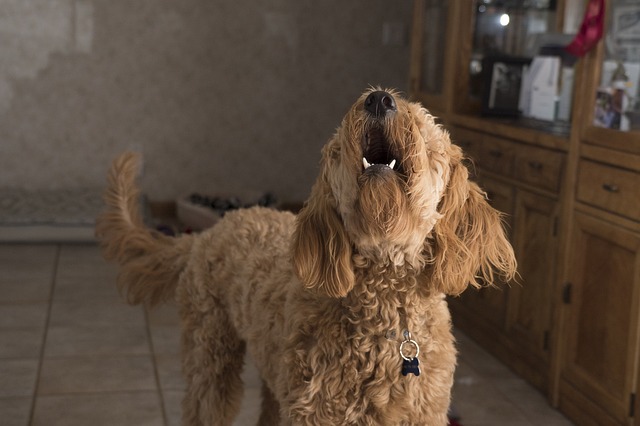
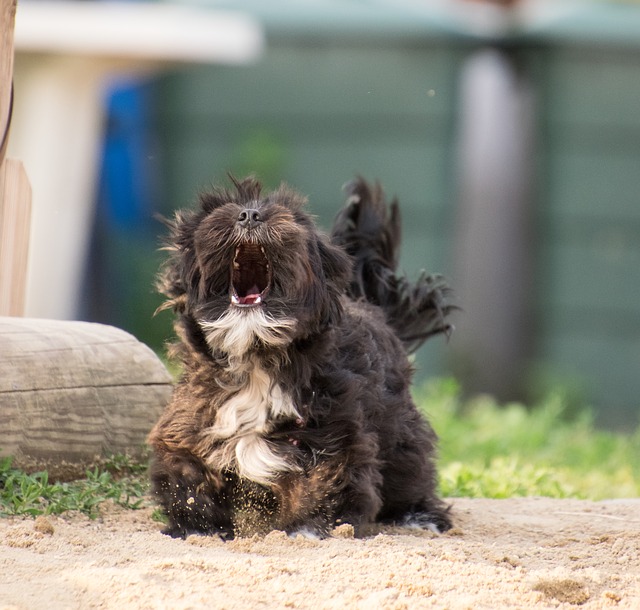
If you have a dog who barks incessantly for whatever reason – to be fed, at the mailman, because he’s bored, to get your attention – you’re probably wishing your dog had an “off” switch. Even if the barking doesn’t bother you, per se, you don’t want to be “that neighbor” with the obnoxious barking dog that everybody hates. So what can you do? Shouting at him to shut up rarely helps. Luckily, there is a way to get your dog to quit barking on cue.

It may help to teach your dog to “speak” first so that you can teach “quiet” on your own schedule. Otherwise, you’re stuck waiting for your dog to bark before you can work on training sessions. If that’s the case, make sure you always have treats handy so that you’re ready whenever the opportunity presents itself.

If you’ve used a clicker for training in the past, or want to start using one now, you’ll want to start by making sure your dog learns or remembers that the sound of a clicker means that a treat is coming. Start by just clicking and rewarding your dog without asking for any behaviors first, then work your way up to commands that your dog already knows before moving on to new things.

To teach your dog to “speak,” do something you know will trigger him to bark, such as ringing the doorbell. As soon as he barks, say “speak” and give him a treat. After doing this a bunch of times, just give him the command “speak,” and if he barks, reward him handsomely.

After asking your dog to “speak” or waiting until he decides to bark, say “quiet” while sticking a treat in front of his nose. As soon as your dog stops barking to sniff the treat, reward your dog (with or without clicking first) with a treat and verbal praise. Once your dog understands that stopping barking earns him treats, start giving him less time to quiet down before giving him the treat. For example, only give him the treat if he stops barking within 10 seconds. After that, start giving him less and less time to stop barking before you reward him with a treat.

Once your dog stops barking immediately upon hearing the “quiet” command, increase the amount of time you make him wait before rewarding him with a treat. Start with just a few seconds and gradually increase the wait time. Eventually, you should only have to reward him with treats periodically for being quiet after hearing the command. You should always give your dog verbal praise for following your commands.

Once your dog has this down pat, he’ll suddenly have an “off” switch for his barking!

(H/T: Good Doggies, Doggie Buddy)


via Whisker Therapy

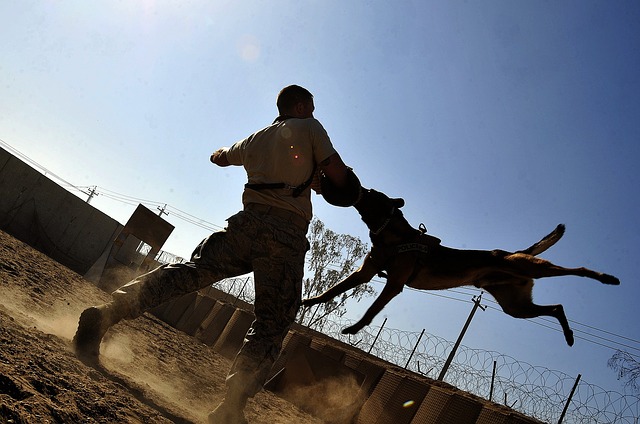
Did you know that more than 4.5 million Americans are bitten by dogs every year? More than 800,000 people require treatment for those dog bites. Unfortunately, dog bites just aren’t as rare as you may think, and sometimes you can get surprised by a bite from your own dog. Why do so many dogs bite people every year? What should you do if your dog bites you? We have the answers you’re looking for.

Why do dogs bite?

Dogs always have a reason for biting, even if you can’t figure it out at first. These are the six most common reasons for dog bites.

#1 – Mouthing

Puppies explore the world with their mouths. Usually, as they play with their siblings, if they bite too hard, the other puppy will yelp and stop playing and they learn that biting too hard makes play stop. Some puppies never learn this bite inhibition, however, especially if they were taken from their mothers at a very young age or if they didn’t have any littermates. It will be up to you to teach your dog not to bite.

If your puppy (or older dog who never learned bite inhibition) bites you when you’re playing, yelp and then make your hand go limp. Ignore your dog for 20-30 seconds so they learn that biting stops play. Offer a toy for your dog to bite instead of your hand. If these techniques alone don’t work, you can try a deterrent spray such as Bitter Apple Dog Chew Deterrent or Yuck! No Chew Spray to teach your dog that biting is gross.

#2 – Pain

Dogs are masters at hiding their pain – until you unintentionally make the pain worse, say by pressing on a sore joint too hard when petting your dog. Signs that your dog is in pain include licking one spot repeatedly; whimpering, whining or growling; altered breathing; changes in sleeping, eating and drinking; and aggressive behavior. If your dog is displaying symptoms of pain, you should take him to the vet immediately to determine the cause of your dog’s pain.

#3 – Prey Drive

Many dogs were bred to hunt and may become a little overexcited during play time. For them, a game of tug of war kicks up their natural instinct to kill, and if your hand gets in the way, so be it. If your dog gets overly stimulated by games like tug of war, try switching to fetch instead.

#4 – Possessiveness

Also called resource guarding, some dogs feel the need to protect their food, bones, or toys at all costs. This is the most dangerous reason for a dog to bite since it isn’t accidental. Resource guarding takes a lot of training to get under control.

First, your dog must understand that you provide everything they need. Before giving them food, water, treats, or toys, make them wait for your permission to access those things. This should help him understand that everything is actually yours instead of his.

Meanwhile, teach your dog “leave it” and “drop it” by exchanging items of value for items of higher value. This helps your dog understand that they aren’t allowed to have things without your permission.

You can also show your dog that allowing you near their precious resource is a good thing by offering treats as you get close to them and their resource.

These techniques may not work, and you may need to enlist the help of a Certified Professional Dog Trainer (CPDT) who has experience rehabilitating dogs who suffer from extreme resource guarding.

#5 – Maternal instinct

If your dog recently gave birth and you approached her and her puppies too quickly, she may have bitten you out of a maternal instinct to protect her puppies. Try approaching slower and letting her get used to the idea of you handling her puppies.

#6 – Fear

Dogs usually display fear aggression towards strangers, but they may be afraid of you, as well, especially if you recently rescued or adopted them from a neglectful or abusive situation. It will take time to earn your dog’s trust. Take your dog for lots of walks. Play with him when he is up for it. Approach your dog from the side at a crouch instead of coming straight at them standing tall. Be consistently fair. Eventually, your dog should learn that he can trust you not to hurt him and he should stop biting.
What should you do after your dog bites you?

#1 – Stay calm

Overreacting can make the situation worse, especially if your dog is reacting out of fear. Yelling at or hitting your dog will only cause him to become more fearful or aroused, making the situation even more dangerous. Keep your dog in another room while you take care of your wound in order to give both of you time to cool down.

#2 – Take care of the wound

The biggest problem with dog bites is the risk of infection. Dogs carry a lot of bacteria in their mouths, and even a seemingly minor bite can become limb- or life-threatening if left untreated. If your dog bites you hard enough to break the skin, follow these steps to reduce the chance of infection.

-Press on the wound to make it bleed. This will help force out some of the bacteria that may have gotten into the wound.

-Wash the area with soap and water. Don’t use peroxide or alcohol since these can destroy healthy tissue, which can lead to other problems.

-Apply pressure with a clean cloth to slow down bleeding.

-If you have any, apply an antibiotic cream such as Neosporin.

-Bandage the wound and go to the doctor.

#3 – Go to the doctor

Since the risk of infections is so high, it’s recommended that anybody with a dog bite should visit the doctor as soon as possible, preferably within 8 hours. If you’re bitten by your own dog, you should bring his vaccination records with you. You should also try to figure out the last time you had a tetanus vaccination. The doctor will likely give you a tetanus shot if you haven’t had one for a while, prescribe antibiotics, and possibly start a rabies protocol if you don’t have proof that your dog is current on his rabies vaccination.

Dog bites typically aren’t stitched up unless they are especially severe or are on the face since closing the wound increases the chances of it becoming infected.

Follow your doctor’s directions about how to take care of the wound while it heals. That will likely include changing the bandages several times a day. Always take the full course of antibiotics that you are prescribed. Failing to do so leads to antibiotic-resistant bacteria and may also cause an infection to flare up after you thought you were in the clear.

If the wound becomes red or swollen, you develop a fever, or the pain gets worse, go back to the doctor immediately. These are signs of infection which can lead to amputations or even death if left untreated.
#4 – Figure out why the bite happened and how to prevent another one

Once the situation has calmed down, try to figure out what caused your dog to bite you. This is a crucial step to avoid being bitten again. Failing to address the root cause of your dog biting you can lead to another bite which could be even more severe than this one.

(H/T: Top Dog Tips, Cleveland Clinic, ASPCA)


via Whisker Therapy

Contact Form

Name

Email *

Message *

Theme images by Storman. Powered by Blogger.