Latest Post
Terminally Ill Sister-Pups Need Your Help To Get The Most From Their Remaining Days

When German Shepherd Rescue of Orange County (GSROC) first heard about Astrid and Eisa, they knew they had to help. The sweet sisters were born in a shelter where it quickly became apparent something was wrong.
The adorable pair have a rare congenital condition that inhibits cellular growth. Without the resources to meet the girls’ special needs, the shelter turned to GSROC.
Astrid and Eisa were welcomed into the rescue family and placed in a loving foster home. As they grew, the weakness in their hind ends became more pronounced. They had trouble walking and required assistance going potty.
After several months, it became clear the sisters would need wheelchairs to stay mobile and independent. Luckily, they adjusted quickly to their new wheels; running free for the first time in their lives!
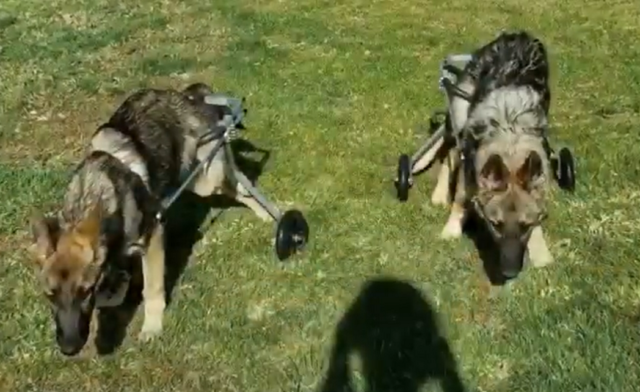
Sadly, the girls’ vet has confirmed their condition is terminal. GSROC shared the following statement with iHeartDogs:
“The condition has no cure, so we are providing them with the best lives that we can give them. The girls are not mobile without their carts, but they love it when they can run free! We would like to provide them with the following to help them live the best life possible, for however long we are blessed with their presence:
– 2 Wheelchairs
– Spa Day for 2
– Booties to help correct the positioning of their feet
– Puppuccinos
– Just Food For Dogs
– Reusable diapers
– XL Puppy pads
– Beach Day
– Shopping Spree at Petsmart and iHeartDogs!
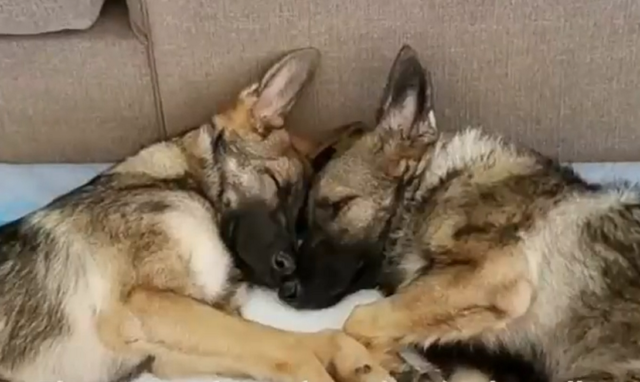
Astrid and Eisa are now six months old. Without the promise of tomorrow, their foster family is determined to make sure they live every day to the fullest!
Please consider making a donation towards the sisters’ bucket list on the GSROC website. *When submitting your contribution, please specify that it is for Astrid and Eisa.
sla
The post Terminally Ill Sister-Pups Need Your Help To Get The Most From Their Remaining Days appeared first on iHeartDogs.com.
via Whisker Therapy
Canid Sociality Seen In Their Eyes
Wolves communicate more by gazing than less social species

“Form equals function” is a fundamental principle of biology. It means that the physical characteristics of a body part are associated with its purpose and that we can predict the function of something by paying attention to what it looks like. When we see the very long, lean muscular hind quarters of a Greyhound and compare them to the same body parts on a Bichon Frise, we can figure out which of these dogs would win a race between the two. Similarly, when we compare the large ears of bats with those of squirrels, it’s easy to conclude that bat hearing is far more acute than squirrel hearing.
via Whisker Therapy
Smiling Dog: Sadie

Dog's name and age: Sadie, 6 years
What are your dog's nicknames? Sadie Belle, Schnickle Fritz, Little Belle
Tell us the story of how you adopted your dog? We were looking for another dog to add to our family which already included two Golden Retrievers and a cat. Looking online we saw her picture at the East Bay Humane Society in Oakland, California and fell in love. In the photo, she was all matted and filthy but when we went to meet her they had already shaved her. She was quite funny looking! As her fur grew back, her personality and appearance really popped. She just got cuter and cuter. I've even had the vet mention that she look like a stuffed animal.
What makes Sadie smile?
Chewing on bones, snuggling on our laps, chasing her much larger brothers (the Goldens) and wearing funny hats.
Tags:
via Whisker Therapy
BREAKING: 25 Varieties of Dog Food Recalled for Elavated Vitamin D – Hills Prescription Diet & Science Diet Affected
Hill’s Pet Nutrition and Science Diet has voluntarily recalled select canned dog food products due to potentially elevated levels of vitamin D.
While vitamin D is essential for dogs, consuming elevated levels can lead to potential health issues such as vomiting, loss of appetite, increased thirst, increased urination, excessive drooling, and weight loss. Vitamin D, when consumed at extremely high levels, can lead to renal dysfunction.
Pet parents with dogs who have consumed any of the products listed below and are exhibiting any of these signs should contact their veterinarian. In most cases, complete recovery is expected after discontinuation of feeding.
In the United States, the affected canned dog foods were distributed through retail pet stores and veterinary clinics nationwide. No dry foods, cat foods, or treats are affected.
The Affected Foods
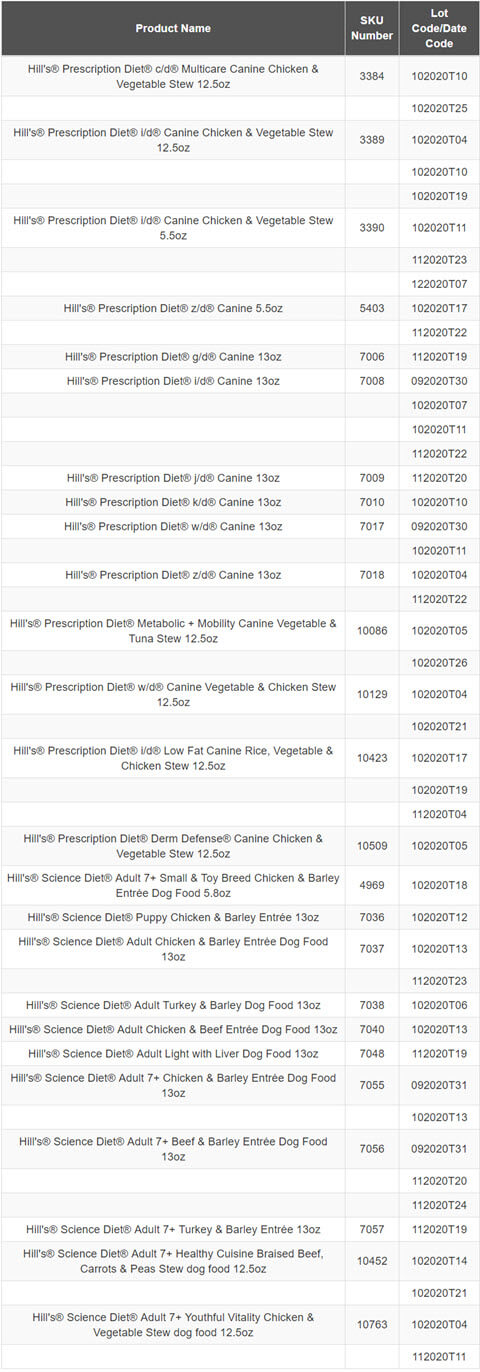
Which Lot Numbers Are Affected?

Important Message from Hills
Hill’s Pet Nutrition learned of the potential for elevated vitamin D levels in some of our canned dog foods after receiving a complaint in the United States about a dog exhibiting signs of elevated vitamin D levels.
Our investigation confirmed elevated levels of vitamin D due to a supplier error.
We care deeply about all pets and are committed to providing pet parents with safe and high quality products.
Hill’s has identified and isolated the error and, to prevent this from happening again, we have required our supplier to implement additional quality testing prior to their release of ingredients.
In addition to our existing safety processes, we are adding our own further testing of incoming ingredients.
This voluntary recall only impacts canned dog food and primarily in the United States.
It is being conducted in cooperation with the U.S. Food and Drug Administration.
For further information, please contact Hill’s Pet Nutrition, Inc. at 1-800-445-5777 Monday-Friday during the hours of 9am-5pm (CST) or at contactus@hillspet.com. Information can also be found at www.hillspet.com/productlist
Please share this recall notice!
The post BREAKING: 25 Varieties of Dog Food Recalled for Elavated Vitamin D – Hills Prescription Diet & Science Diet Affected appeared first on iHeartDogs.com.
via Whisker Therapy
7 Ways Pet Parents Can Help Control Their Dog Allergies

15 to 20% of Americans have some sort of allergic reaction to dogs. Despite the prevalence of dog-related asthma, sneezing, itchy skin and hives, nearly half of US households have at least one pup. Pet lovers are clearly willing to endure their symptoms in order to enjoy the many benefits of sharing their lives with dogs. Luckily, there are several things these pawrents can do to help control their dog allergies.

What Causes Dog Allergies?
According to the Mayo Clinic, allergies occur when the immune system reacts to an allergy-triggering substance. For example, when a person with dog allergies encounters a pup, their body reacts to proteins in the hair and skin cells (dander). The immune system goes into defense mode, causing inflammation of the skin, sinuses, airways or digestive system.
The severity of the allergic reaction varies from person to person and can change throughout an individual’s life. Some may get an itchy rash while others suffer sinus pressure and sneezing. In rare cases, life-threatening asthma or deadly anaphylaxis can occur.
Before you blame your symptoms on your pup, see your doctor for allergy testing. You may find you are reacting to your dog’s shampoo or pollen on his fur, not the dog himself!
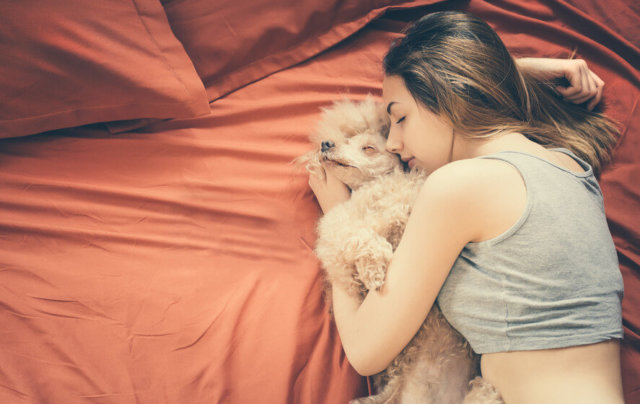
7 Ways To Help Control Your Dog Allergies
Studies have shown only one in five owners are willing to give up their pups due to allergies – even when their doctors recommend it. If allergy testing shows you are indeed allergic to your dog, there are several ways you can help minimize your symptoms and keep your pup!
1. Create an “Allergy-Free” Zone in Your Home.
The dander that causes dog allergies has a way of sticking to clothes, bedding, curtains and carpets. If possible, folks with allergies should restrict their dogs’ access to the bedroom. It may seem sad to give up nightly cuddles with your pup, but it’s better than having to give him up for good! Those with strong allergies should also invest in high-efficiency HEPA air cleaners to make sure dander from around the house does not drift into their “allergy-free” zone.
2. Lose the Carpets.
As mentioned above, allergens have a knack for sticking to soft surfaces. Removing carpeting in favor of hardwood, tile or laminate flooring will help minimize buildup. Drapes and curtains should also be replaced with shutters or blinds. When it comes to furniture, synthetic leather is a better choice than fabric. If you cannot replace your carpets, be sure to have them deep-cleaned at least twice a year.

3. Clean/Vacuum Frequently.
Frequent cleaning and vacuuming prevents allergens from building up in the nooks and crannies of your home. Wipe down all surfaces where dust may accumulate, including fan blades and shelves. Change air filters regularly – perhaps even more often than monthly – and wear a mask when dusting and cleaning, as these activities are likely to trigger your dog allergies.
Be sure to choose a vacuum cleaner with a HEPA filter. They remove up to 99.97% of tiny, allergy-inducing particles. It is also important to ensure your vacuum is functioning properly. If not tightly sealed, allergens may bypass the filter and be redistributed back into the air. After vacuuming, empty the canister outside to prevent particles from spreading back into your home.
4. Wash Your Dog’s Bedding Weekly.
Dogs spend most of their time sleeping or lounging, so it is no wonder their bedding is a magnet for hair and dander. Frequent washings with specially formulated laundry detergent will help remove allergens. If your pup’s bed is awkward to wash, try covering it with blankets or sheets to catch the dander. These items can be easily tossed into the wash and replaced.

5. Keep Your Dog Well-Groomed.
Many people with dog allergies seek out “hypoallergenic” breeds. While no dog is entirely allergen-free, smaller, low-shedding breeds tend to cause less symptoms. However, low-shedding dogs have constantly-growing hair coats that require frequent grooming.
Talk to your groomer about choosing a short, neat haircut. Sometimes referred to as a “puppy cut,” this style will reduce the number of allergens that accumulate on the hair coat.
While your groomer will bathe your dog at the time of his haircut, you may also want to give extra baths at home. Frequent bathing removes dead skin cells and can reduce allergens by as much as 84%. Just keep in mind that over-bathing can be harmful to your pup’s delicate skin. Ask your vet to recommend a shampoo and help you come up with a bathing schedule.
Grooming wipes are another choice when a full bath is not an option. They are gentle, fresh-smelling and help swab away allergens on your dog’s coat and paws after trips outside.
Frquent brushing also helps remove dead hair and dander that may otherwise trigger your dog allergies. As an added bonus, it is great for your pup’s skin and coat.

6. Make Sure Your Pup is Potty Trained.
Potty training is one of the basics of dog ownership, but did you know it can also help reduce your allergies? In addition to dander, dogs release allergens through their urine. The particles stick around long after the pee has dried and easily spread throughout the air. For help potty training your stubborn pup, check out this post.
7. Take Medications.
This one may seem like a no-brainer, but being a pet parent with dog allergies does not necessarily mean you have to spend your life in a Benadryl fog. New allergy treatments are emerging all the time, so work with your doctor to find the right combination of medications and holistic options that work for you. Just be sure your allergist understands you are commited to keeping your dog.
Antihistamines, inhalers, decongestants, steroid-based treatments and immunotherapy (allergy shots) can all be quite effective depending on the patient. Vitamins like E, C, A, and B6, as well as oils containing omega-3 fatty acids may also help bolster your system to defend against your dog allergies.

Devoting yourself to these small changes can make a world of difference when it comes to living with dog allergies. As you already know, your pup is worth it!
The post 7 Ways Pet Parents Can Help Control Their Dog Allergies appeared first on iHeartDogs.com.
via Whisker Therapy
Subscribe to:
Posts (Atom)